Population Dynamics Foundation Model Enhances Global Public Health Data
The Population Dynamics Foundation Model (PDFM) improves epidemiological workflows by leveraging self-supervised geospatial data to enhance accuracy and timeliness in disease surveillance and forecasting.
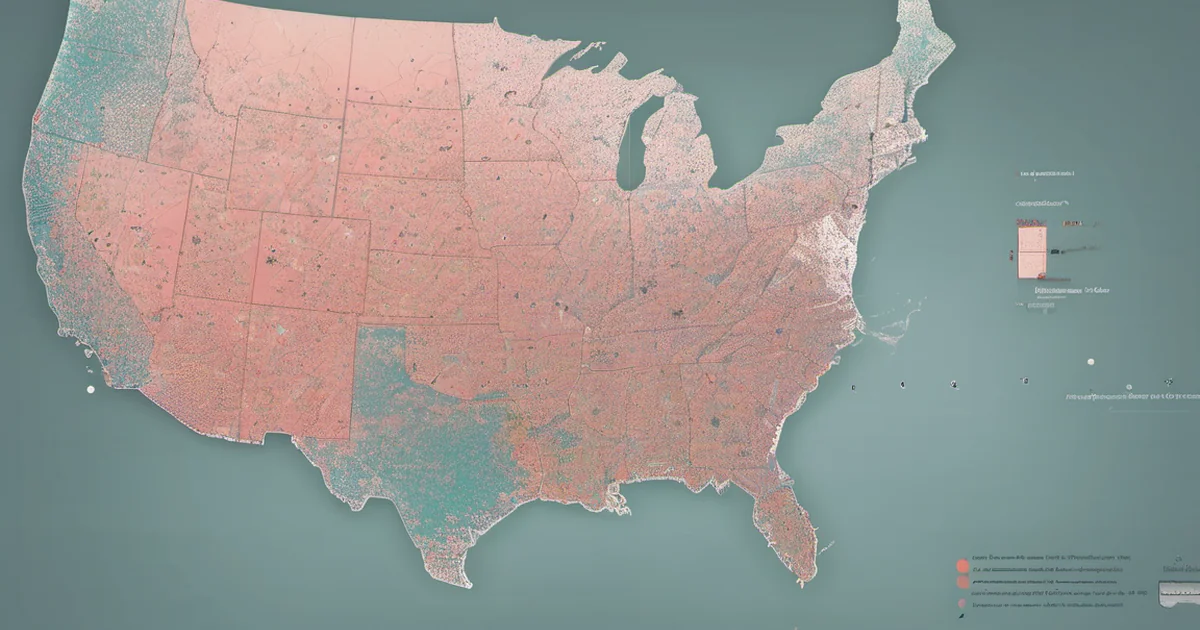
Introduction to the Population Dynamics Foundation Model (PDFM)
Unlocking Earth AI’s planetary geospatial foundation models for global public health introduces the Population Dynamics Foundation Model (PDFM), a novel approach to addressing data gaps and delays in epidemiological workflows. As described by Arbaaz Muslim and Gautam Prasad of Google Research, the PDFM leverages self-supervised, pre-trained representations of 'place' to enhance existing health sciences and epidemiological models. This model is presented as a plug-and-play input, allowing integration into current statistical and machine learning frameworks without requiring the development of entirely new pipelines. The introduction of this paradigm aims to streamline public health responses by improving the accuracy and timeliness of data used in disease surveillance and forecasting. By building on existing workflows, the PDFM offers a scalable solution to some of the most pressing challenges in global health data infrastructure.
Case Studies Demonstrating PDFM's Application in Public Health
Case studies demonstrate the application of Earth AI’s Planetary Foundation Models (PDFM) in addressing public health challenges across diverse settings. In one example, the Mount Sinai Health System and Boston Children’s Hospital used PDFM for cross-border extrapolation of MMR vaccination coverage along the US–Canada border, achieving a +36% relative gain in explained variance by incorporating cross-border mobility and information spillovers. Another application by the Department of Population Health at NYU Grossman School of Medicine showed that PDFM can nowcast and interpolate cardiovascular disease mortality across the contiguous United States with accuracy comparable to census-based models, even when census data are outdated or unavailable. In the Democratic Republic of the Congo, the WHO AFRO utilized PDFM for cholera outbreak onset prediction, achieving statistically significant improvements in precision and recall metrics, including +19.3% Precision@5 in endemic health zones. These examples highlight PDFM’s potential to support public health efforts in resource-limited and data-scarce environments.
Quantitative Results and Impact of PDFM in Specific Health Challenges
Quantitative results demonstrate the impact of Earth AI’s planetary geospatial foundation models (PDFM) on specific health challenges. By incorporating cross-border context, the models increased the share of variation in MMR vaccination coverage explained from 16% to 22%—a 36% increase—while refining coverage estimates by at least 3 percentage points for 4.7 million border residents, revealing local patterns that domestic-only models may miss (Google Research). In simulations where a health system targets the 20% highest-risk mothers, PDFM enabled reaching 5,640 more rural mothers with postpartum depression annually (Google Research). Additionally, for systems aiming to catch 80% of all cases, PDFM reduced false alarms by 17,723 annually, showcasing how geospatial embeddings can enhance rural outreach or follow-up efficiency (Google Research).
Integration of PDFM with Other Models and Partnerships
In partnership with public health researchers at the University of Oxford and Tecnológico de Monterrey, Earth AI coupled PDFM with TimesFM 2.0 (their open time-series foundation model) to forecast dengue case counts across ~2,450 Mexican municipalities between 2020 and 2025 [Google Research]. Researchers at the University of Washington evaluated PDFM embeddings across 332,970 participants in the CDC PRAMS national survey to test whether geospatial foundation models can help bridge gaps in public health data [Google Research]. By integrating planetary contextual data into existing public health workflows, Earth AI aims to improve how healthcare resources, interventions, and outbreak alerts reach the communities that need them most [Google Research].
Future Directions and Potential of Geospatial Foundation Models
Future Directions and Potential of Geospatial Foundation Models
Looking ahead, geospatial foundation models hold the potential to transform global public health by enabling proactive and time-sensitive health intelligence at a planetary scale Google Research. These models leverage multimodal data to generate population embeddings, offering a more comprehensive understanding of health dynamics across diverse regions. However, establishing a new paradigm for global health carries a higher burden of proof Google Research. As Earth AI continues to develop its geospatial foundation models, the integration of such technologies into public health systems will require rigorous validation and collaboration across disciplines. The potential of these models is significant, but their success will depend on transparent research practices and adherence to privacy and ethical standards as outlined by the developers Google Research.
Sources and reporting notes
Based on published source material. No independent hands-on testing is claimed.



