Trump Declares Robot Imports a National Security Threat
President Trump has declared foreign-made factory robots a national security threat, potentially imposing tariffs and negotiating with trading partners to adjust imports within 180 days.
Declaration of Robot Imports as a National Security Threat
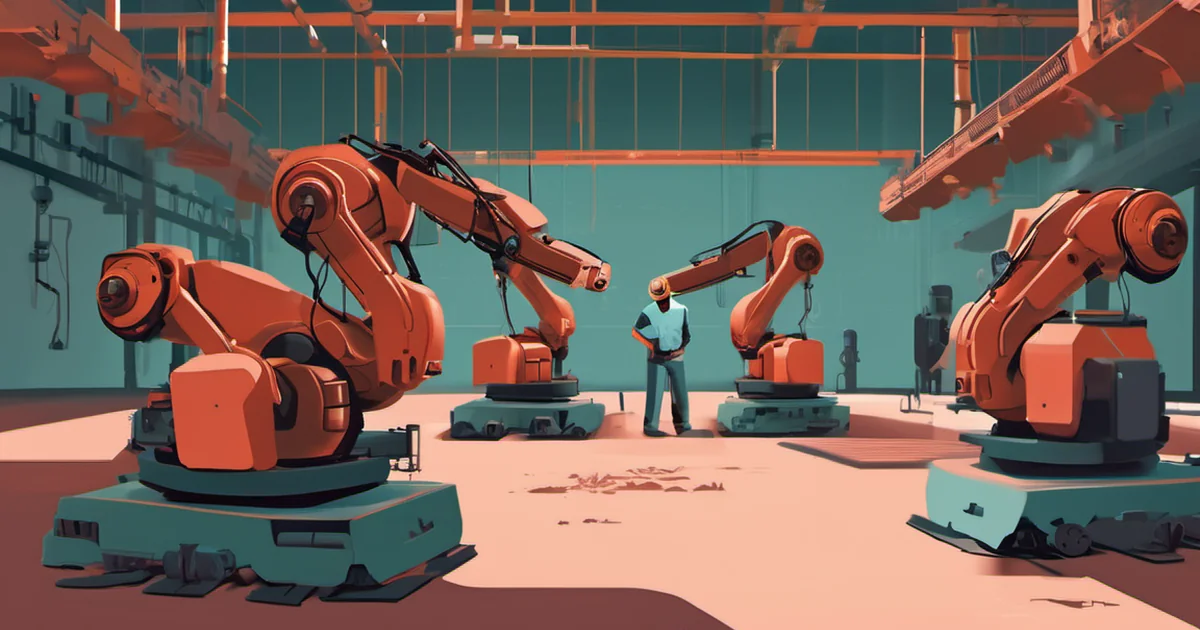
President Donald Trump has declared the imports of foreign-made factory robots to be a national security threat—ordering new US negotiations with trading partners while holding out the possibility of imposing new tariffs on such robot imports in the future. Issued on October 28, Trump’s presidential proclamation represents heightened government scrutiny of foreign-made industrial robots that could complicate the manufacturing operations of major US corporations that rely on such robots. Trump’s proclamation describes industrial robots and machinery as being crucial for producing US military weapon systems along with representing a “driving force” behind all critical infrastructure sectors within the US economy.
Impact on Major US Corporations
The declaration of robot imports as a national security threat by Trump could significantly impact major US corporations. Companies such as General Motors, Ford, Tesla, Boeing, and Lockheed Martin rely on robotic arms from foreign manufacturers like FANUC, ABB, Yaskawa, and KUKA for factory operations. According to Ars Technica AI, these firms frequently source robotic equipment from the “big four” robotics makers based in Japan, Switzerland, and Germany. Even Amazon, which has deployed more robot workers than any other company, continues to use foreign-made robots, including FANUC arms, despite expanding its own in-house robot production, as noted in Ars Technica AI. This reliance on foreign robotics could pose challenges for these corporations if new restrictions are imposed, potentially disrupting supply chains and increasing costs. The extent of the impact will depend on how strictly the policy is enforced and whether domestic alternatives can be scaled quickly.
Potential Tariffs and Negotiations
Under Trump’s directive, the United States and its trading partners are being asked to adjust imports of robotics, industrial machinery, and their components within 180 days of the proclamation’s date, as stated in the directive Ars Technica AI. If no agreements are reached by then, the proclamation warns that the president may impose additional actions, such as tariffs, duties, quotas, and fees on such imports Ars Technica AI. These tariffs and fees would be borne by U.S. companies importing foreign-made robots Ars Technica AI. The potential for such measures highlights the administration’s focus on reshaping trade dynamics in the robotics sector, with an emphasis on national security concerns. However, the exact nature of any future negotiations or the potential impact on U.S. businesses remains unclear at this stage.
Reliance on Foreign Robotics and Domestic Shortcomings
Reliance on Foreign Robotics and Domestic Shortcomings
According to Trump’s own proclamation, US robotics companies do not produce enough industrial robots to “meet national security needs,” and the United States “relies on foreign imports for most types of robotics and industrial machinery and for their components,” as noted in the evidence. No US company currently offers comparable heavy-duty hardware for large industrial robotic arms, although foreign robotics makers have been expanding their US engineering and assembly facilities. If Trump eventually slaps tariffs on US imports of foreign-made industrial robots, that would at least fall short of restricting imports outright. As Intel recently showed, major US companies can still get waivers from the Trump administration to continue using foreign-made robots even when a nominal ban is in place.
Sources and reporting notes
Based on published source material. No independent hands-on testing is claimed.



