Stringman: Open Source AI Claw Robot for Home Automation
Stringman is an AI-equipped claw suspended from four strings, using motorized anchors to move around a room and perform tidying tasks with a 2 kg payload capacity.
Stringman's Design and Functionality
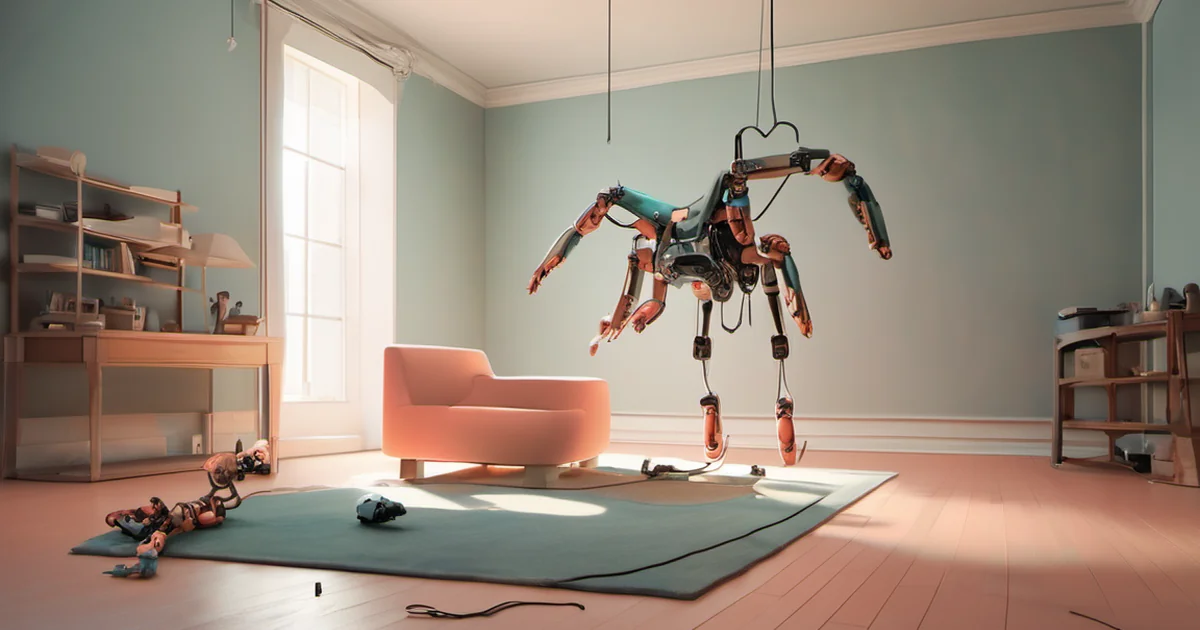
Stringman is an AI-equipped claw suspended from four strings running through the corners of a room (up to 10 meters diagonally). Two motorized anchors adjust the lengths of the strings to move the claw around the room, from ceilings up to 4 meters high down to the floor to pick stuff up. With a payload capacity of around 2 kg, depending on its position, Stringman can move items to designated locations – like a toy box – and perform tidying tasks. The design leverages tension and precise motor control to enable smooth and accurate movement. As an open source project, Stringman invites collaboration and customization, allowing users to adapt the robot to various environments and purposes. The system's flexibility and scalability make it a promising tool for home automation and robotics enthusiasts.
Manual Control and Potential Uses
The Stringman robot offers manual control options, allowing users to operate it like a room-sized crane game, as noted by its developers. This feature provides a hands-on experience for those who prefer direct interaction with the robot. Beyond entertainment, Stringman’s capabilities extend to practical applications, such as retrieving objects from hard-to-reach places. For instance, a properly trained Stringman could fetch a remote control from across the room and deliver it to the user’s hand, as suggested by its creators. According to Neufangled’s future roadmap page, the company aims to help users organize their homes more efficiently. These potential uses highlight the robot’s versatility, though specific training and setup requirements are not detailed in the provided information.
Technical Requirements and Cost
The technical requirements for building the Stringman robot involve a combination of hardware and software components. According to the documentation site, a complete Stringman setup requires three Raspberry Pis connected to a Wi-Fi network—one in the gripper and two in the corner anchor mounts that house line reels and cameras for tracking the claw’s movement. Additional components include a 3D printer for custom parts, a supplier for manufacturing PCBs, and various motors and other hardware listed in the bill of materials. While the project is open source and accessible to hobbyists, the cost remains a barrier. Neufangled lists Stringman for $795, which is a significant investment for a public prototype that is not yet reliable enough to be considered a home appliance. The project highlights the potential of open-source robotics but also underscores the challenges of affordability and reliability in consumer-grade applications.
Safety and Limitations
Safety and limitations are important considerations when using the open source robot designed to turn your home into a giant crane game. According to the robot’s website, it has a tension limit of 28 newtons, or around six and a quarter pounds of force, which defines the maximum force it can exert during operation. The device’s creator, Nifong, acknowledges in the documentation that users could potentially walk into the robot’s operational lines, though he himself has done so without injury. Additionally, Stringman’s documentation site notes that the device is currently a public prototype that “can self-calibrate in a new room and run policies, but is not yet reliable enough to be called a home appliance.” While demonstration videos on the website show the robot in action and are visually engaging, users should be aware of its current developmental stage and exercise caution when interacting with it.
Open Source and Accessibility
The open source nature of the project makes it accessible to a wide range of users, from hobbyists to professionals. As noted, it’s fully open source, allowing anyone to explore, modify, and contribute to the project’s development. Setting up the system requires following detailed guides on the documentation site, which include steps for calibration, setup, and programming. For those who prefer a less hands-on approach, a simulated version of the robot is available on Stringman’s web portal. This simulation allows users to connect to a personal machine over LAN, the cloud, or use the simulated version directly. These features ensure that the technology is not only open but also practical for different levels of engagement and technical expertise.
Sources and reporting notes
Based on published source material. No independent hands-on testing is claimed.



