Sowbot Project Advances in Agri Robotics Integration and Safety Constraints
The Sowbot project integrates software and hardware for autonomous agricultural robotics, using ROS2 and Agri Open Core, but faces challenges in field validation and safety constraints requiring hard-wired 24V loops and supervised operations.
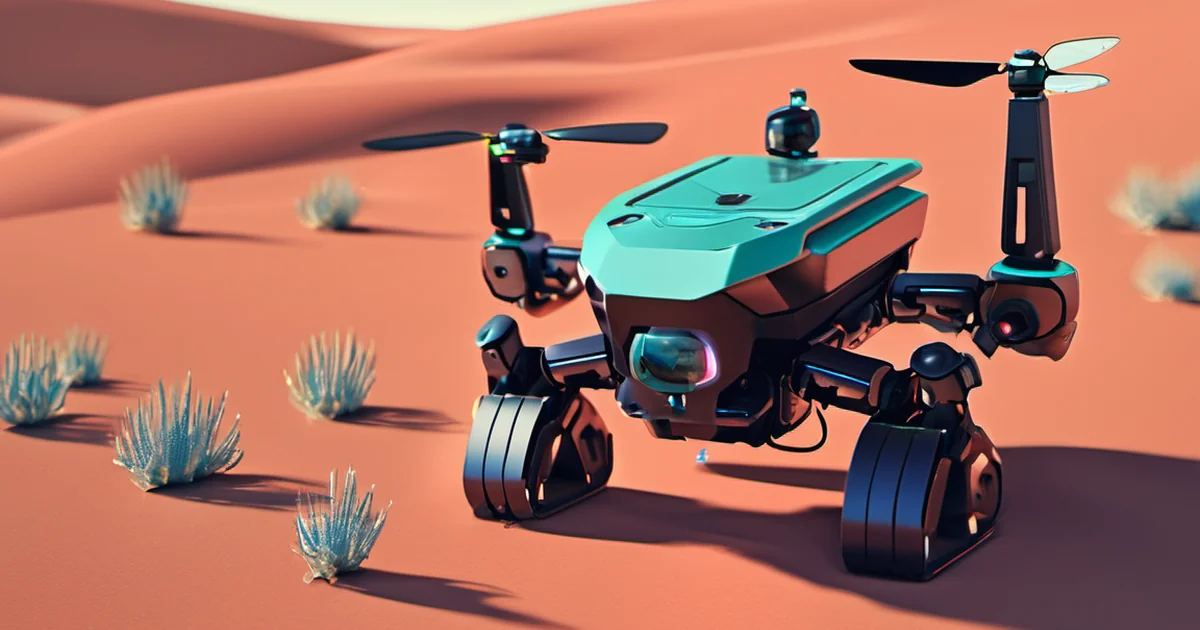
Software and Hardware Integration
The Sowbot project has made significant strides in integrating software and hardware for autonomous agricultural robotics. The open-source, containerised ROS2 Jazzy stack provides a robust foundation for autonomous operations, enabling seamless communication between various system components. The Agri Open Core (AOC) platform demonstrates effective abstraction on affordable ARM hardware, making advanced robotics accessible to smallholders. However, field validation of hardware has faced challenges, particularly with the fusioncore Nav2 bridge. When the MAVLink bridge is not running, the fusioncore_node is launched via devkit.launch.py, but with the bridge active, EKF3 becomes the estimator while FusionCore operates in shadow mode. These details highlight the ongoing work to ensure reliable hardware-software integration in real-world agricultural environments.
Safety and Operational Constraints
Safety and operational constraints are central to the Sowbot project’s progress. According to the safety_roadmap.md, operation requires a hard-wired 24V loop, including a physical E-stop path, to be built and tested, or a separately validated independent stop method; otherwise, operation is prohibited [Hacker News Show]. Until objectives O7, O8, and O14 are completed, any permitted operation must be supervised-only, with a competent person within reach of a physical E-stop or a separately validated stop control [Hacker News Show]. Additionally, no one may work near the robot during supervised operation, and no safety claim may be made [Hacker News Show]. These constraints remain in place until the 24V stop loop, radar validation, and beacon integration are completed [Hacker News Show].
Development and Testing Procedures
The development and testing procedures for Sowbot involve a series of scripted commands to manage hardware discovery, port permissions, and software builds. To begin, users are instructed to clone the repository using the command git clone -b caatinga-dev https://github.com/Agroecology-Lab/Sowbot.git and navigate into the project directory. The ./manage.py full-build script automates hardware discovery and port permissions, and users must run xhost +local:docker to allow Docker access. The WebUI is then accessible at http://localhost, providing a dashboard with a joystick, soft e-stop, and port 80 access. Additional build commands include ./manage.py build for local-only cached builds, ./manage.py build +pull for re-cloning external repositories while keeping layers cached, and ./manage.py build +pull +sim for simulation setup with INSTALL_SIM=true. These procedures are detailed in the project's documentation and are essential for setting up the robot's environment.
Navigation and Simulation Setup
The navigation system for Sowbot is built upon the high-level navigation framework developed by the Lincoln Centre for Autonomous Systems (LCAS) as part of the Agri-OpenCore open ROS 2 ecosystem for agricultural robotics. This system forms the foundation for autonomous movement and path planning within the robot's operational environment. The simulation setup draws from the work of caatingarobotics, providing a basis for testing and development before deployment in real-world conditions. A critical safety warning is issued by the developers, emphasizing that the software is still under active development and may contain instability or errors at any time. The system runs on a read-only rootfs, either Ubuntu Noble minimal or Yocto with an RT kernel, and includes pre-built LCAS topo nav, Nav2, and rmw_zenoh_cpp (though the current stack uses rmw_cyclonedds_cpp). A one-command simulation launch is available via TMuLE, with options to disable the simulated camera or adjust camera parameters such as width, height, and frame rate.
Future Development and Production Timeline
Future development and production timelines for Sowbot indicate a phased approach, with Phase 1 currently underway as a development platform. According to Hacker News Show, product classification hinges on the final configuration and incorporation boundary, necessitating conformity assessment, documentation, and appropriate marking for complete machinery. While Hacker News Show notes that production is anticipated around 2027, this remains speculative. The project currently utilizes ArduPilot on LEVIA-H7 (M9) as its controller, with ESP32/Lizard designated as legacy hardware. As highlighted in Hacker News Show, users must adhere to professional duty-of-care standards when operating agricultural robotics, despite the application of standard open-source licenses. These considerations underscore the importance of regulatory compliance and safety in the deployment of such technology.
Sources and reporting notes
Based on published source material. No independent hands-on testing is claimed.



