Runway Releases Praxis-1 Robot Model Under Apache 2.0 License
Runway has released its Praxis-1 robot model with open weights and source code under the Apache 2.0 license, enabling developers and researchers to use it for various applications including commercial purposes.
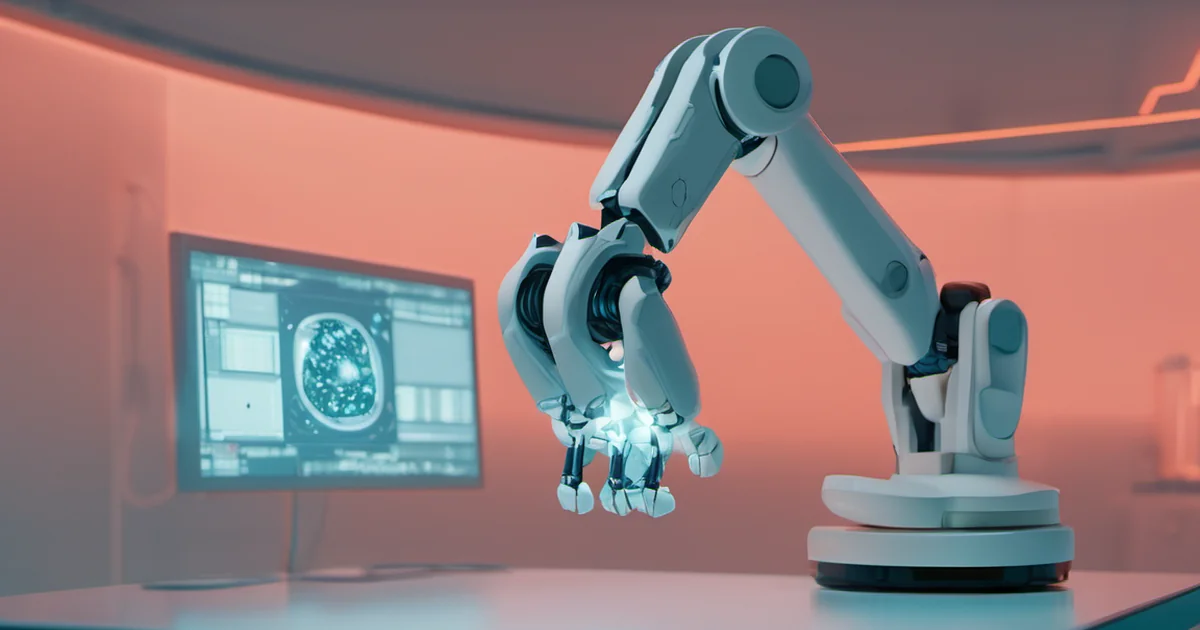
Release and Licensing of Praxis-1
Runway has released its robot model Praxis-1 with open weights and source code under the Apache 2.0 license, as stated by the company. This move allows developers and researchers to access and utilize the model for various applications, including commercial purposes. The Apache 2.0 license is known for its permissive terms, which facilitate collaboration and innovation within the open-source community. By making Praxis-1 available under this license, Runway aims to foster broader adoption and integration of video AI capabilities into robotic systems. The release of Praxis-1 marks a significant step in making advanced AI technologies more accessible to a wider audience, enabling further exploration and development in the field of robotics.
Adaptability and Training of Praxis-1
Runway's Praxis-1 demonstrates adaptability across different robot systems through additional training, as stated by the company. According to its research report, adapting Praxis-1 to a Franka robot arm required approximately 277 hours of recordings from the public DROID research dataset. This highlights the model's reliance on external data for fine-tuning. However, whether this approach reduces the overall need for robot-specific data compared to models without general video pretraining remains an open question, as noted in the research. The adaptability of Praxis-1 underscores the importance of pretraining in video AI, though its long-term efficiency in reducing data requirements is still under investigation.
Testing and Performance of Praxis-1
Testing and Performance of Praxis-1 has been evaluated by multiple robotics companies, including Standard Bots, Noble Machines, and Ultra, which have been using the model on various systems such as a humanoid robot, an industrial robot arm, and a dual-arm warehouse robot since September. Runway also tested Praxis-1's ability to transfer to a new robot type, using data from a mobile robot platform with a gripper arm previously used by Google for RT-1 development. According to Runway, after fine-tuning on approximately 95 hours of robot data, the model achieved an average success rate of 80 percent in simulated tests.
Functionality and Design of Praxis-1
Runway's Praxis-1 functions as a World Action Model, designed to predict scene changes and generate corresponding robot movements. It processes camera images, text instructions, and robot position data to guide robotic actions. Praxis-1 builds on a video model trained from ordinary footage, enabling it to understand object movement and interactions. This foundation allows Praxis-1 to translate visual and textual inputs into precise robotic control. The system does not claim to perform tasks outside its training scope, and its effectiveness depends on the quality and relevance of input data. Runway emphasizes that Praxis-1 is an experimental tool, with performance subject to real-world conditions and application-specific constraints.
Initial Access and Expansion of Praxis-1
Runway's Praxis-1 was first introduced in late September, though initial access was limited to select partners, according to the-decoder.com. The system is designed primarily for the rapid execution of robot movements, as noted by the-decoder.com. Early training data for Praxis-1 did not include recordings from robots, as stated in the-decoder.com. This suggests that the system's initial capabilities were based on other forms of input or data. As Praxis-1 expands, its potential applications in robotics may grow, though the company has not yet provided broader access or detailed performance metrics. The system's development highlights Runway's focus on integrating video AI with robotic control, but further details on its capabilities and limitations remain to be disclosed.
Sources and reporting notes
Based on published source material. No independent hands-on testing is claimed.