Red Hat and DXC Demonstrate SDV Platform at ELIV 2026
Red Hat and DXC demonstrated a software-defined vehicle platform integrating AD/ADAS and digital cockpit workloads on a single high-performance compute platform using Red Hat In-Vehicle Operating System and DXC AMBER.
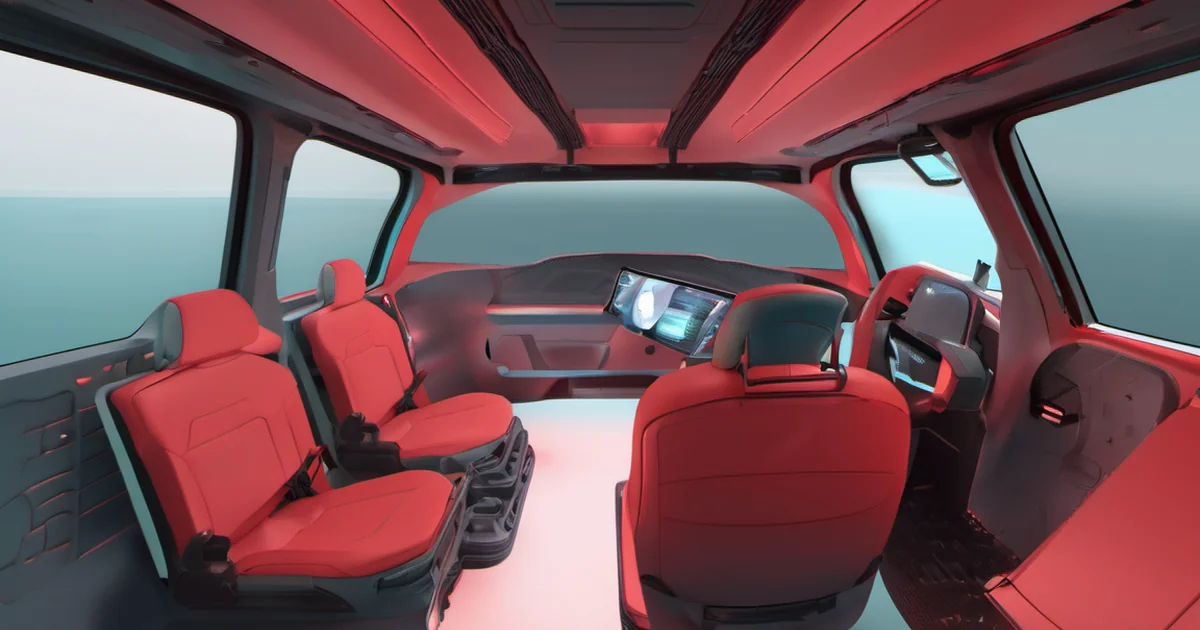
Integration of Red Hat In-Vehicle Operating System and DXC AMBER
At ELIV 2026 in Baden-Baden, Red Hat and DXC demonstrated a software-defined vehicle (SDV) platform that integrates AD/ADAS and digital cockpit workloads on a single high-performance compute platform. The solution relies on Red Hat In-Vehicle Operating System, which provides an ISO 26262 ASIL-B certified Linux foundation for the safety-relevant software domain. DXC AMBER serves as the middleware, communication, and hardware enablement framework, acting as the cross-domain integration layer for the SDV platform. This combination allows for a mixed-criticality architecture, where safety-critical and non-safety-critical workloads coexist without compromising performance or security. The core ingredients of this solution include DXC AMBER, which functions as the software-defined platform layer, and Red Hat In-Vehicle Operating System, which ensures robustness and compliance in the safety-critical domain.
Isolation Mechanisms in the Software Architecture
Isolation mechanisms in the software architecture of the mixed-criticality software-defined vehicle solution ensure that safety-critical and non-safety-critical functions operate independently without interference. A Type 1 hypervisor provides isolation between the Android Automotive OS (AAOS) and the Red Hat In-Vehicle Operating System, separating them into dedicated virtual machines (VMs). Within the Red Hat In-Vehicle Operating System, containerization further isolates safety-critical subsystems such as ADAS from other components like the instrument cluster. Additionally, Linux-native isolation mechanisms and specialized configurations reduce the need for separate guest operating systems, minimizing virtualization overhead while maintaining separation between safety-critical and QM environments. The SoC’s ASIL-D safety island and an Infineon AURIX companion MCU provide additional safety and vehicle-interface capabilities, reinforcing the overall isolation strategy.
Safety-Critical Workloads and Containerization
In the Red Hat In-Vehicle Operating System and DXC AMBER mixed-criticality software-defined vehicle solution, safety-critical workloads are executed in containers on a safe Linux environment, eliminating the need for separate VMs for each safety-relevant domain. This approach enables efficient resource utilization and streamlined management of safety-relevant applications. For instance, the ADAS/ACC application and the DXC AMBER instrument cluster, both classified as ASIL-B workloads, operate in separate containers within the same Red Hat In-Vehicle Operating System environment. This architecture ensures isolation and reliability while maintaining performance. The digital instrument cluster, a high-performance UI engine with a safety-grade rendering layer, is deployed as an ASIL-B container on the same platform, ensuring predictable real-time behavior and supporting advanced cluster designs.
Red Hat In-Vehicle Operating System: Safety-Certified OS Layer
At the core of the safety domain sits Red Hat In-Vehicle Operating System, a production-grade, open-source Linux platform certified as a Safety Element out of Context (SEooC) against ISO 26262 ASIL-B. Its current safety certificate includes a mixed-criticality claim, allowing safety-critical applications up to ASIL-B and quality-managed (QM) workloads to share a single ASIL-qualified Linux kernel. This capability enables scenarios such as the ADAS/ACC application and instrument cluster, both ASIL-B, to run as separate containers within the same Red Hat In-Vehicle Operating System environment.
DXC AMBER: Software-Defined Platform Layer
The DXC AMBER platform serves as a software-defined layer that enables the integration of multiple operating systems and applications within a single SoC. It supports safe and secure inter-VM communication, network communication, diagnostics orchestration, software update, and other cross-domain services such as power and state management, logging, and health management, all in a SoC-agnostic and safety-compliant way . A key component of this platform is the AAOS IVI stack, which includes a pre-integrated Android Automotive OS stack with DXC enhancements, app store, and OTA updates, all running in its own VM on a Type 1 hypervisor . Launched at CES 2026, the platform is currently being deployed to production programs . This architecture allows for a mixed-criticality environment where safety-critical and non-safety-critical functions can coexist without compromising performance or security.
Sources and reporting notes
Based on published source material. No independent hands-on testing is claimed.



