OATs: AI Avatars for Everyday Objects Inspired by Tamagotchi
OATs, or Object Agent Twins, are micro-agent AI avatars displayed on E Ink screens, inspired by Tamagotchi, designed to pair with household objects and encourage user interaction through virtual pet interfaces.
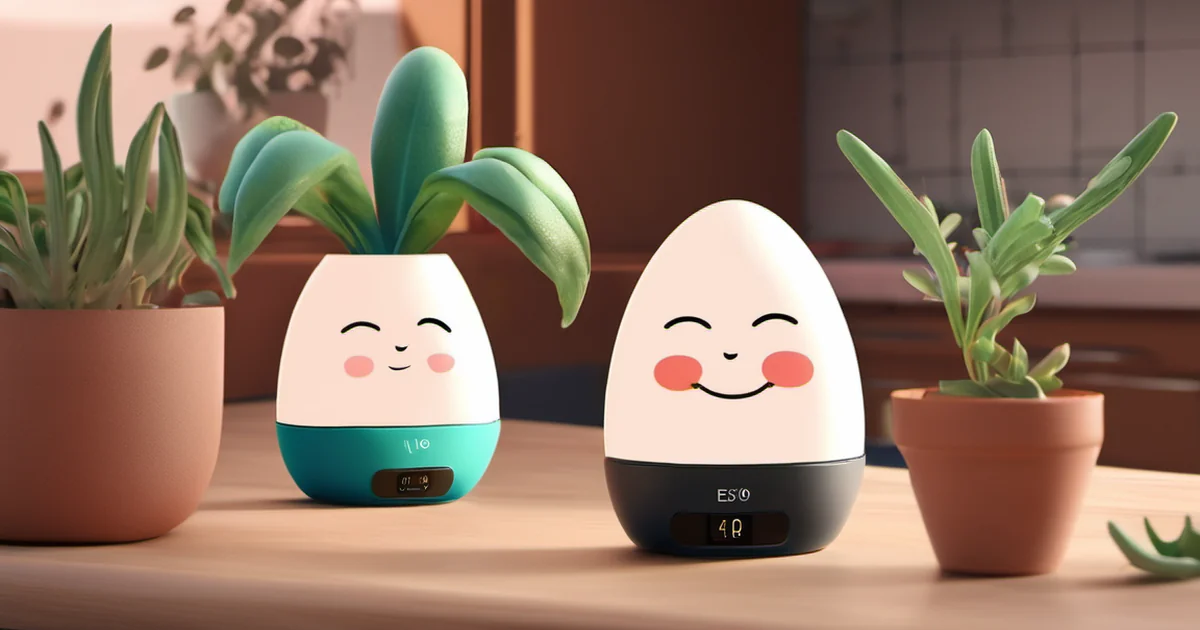
Concept and Inspiration Behind OATs
OATs, or Object Agent Twins, are micro-agent AI avatars displayed on tiny E Ink screens, designed to pair with everyday household objects. The concept draws inspiration from the Tamagotchi, the iconic ‘90s digital pet toy that required real-time care and attention from users. Creator Kim aimed to extend this interactive experience to physical objects in daily life, transforming them into needy virtual pets. Each OAT acts as a digital companion that reflects the status and needs of its paired object, encouraging users to engage with their environment in new ways. This approach merges nostalgia with modern AI, offering a novel way to foster mindfulness and interaction with everyday items. The project highlights how AI can be used to create emotional connections between users and their surroundings, turning mundane objects into meaningful, interactive experiences.
Implementation and Customization of OATs
The implementation of OATs (Object-Attached Tamagotchis) begins with a low-cost hardware module, priced around $20, which serves as the main unit. This module connects to various sensors, allowing users to monitor and interact with everyday objects through a virtual pet interface. The visual elements of the OATs, such as the sprites representing different emotional states, are generated using Google Gemini's Nano Banana image-generation service, which creates a range of expressions based on sensor data. Users can set up and customize their OATs through a web portal, where they can assign names and select which sensors to link to the object being monitored. For instance, if an OAT is attached to a plant, users can tailor the behaviors of the virtual pet to match the specific needs of that plant type, as noted in the customization process. This level of personalization ensures that each OAT can be uniquely adapted to its environment and purpose.
Limitations and Practical Use Cases
The AI Tamagotchi concept, while innovative, has notable limitations that affect its practicality. According to research, the system's battery life is very short, making it more of a proof of concept than a viable long-term solution. Specifically, OATs (Object Attachment Tags) last around three to four days, but when paired with the sound level sensor, their battery life is reduced to just one day. This limits their usefulness in scenarios requiring continuous monitoring. However, there are practical use cases where the technology can be applied. For example, attaching an OAT to a 3D printer can warn users when the device is operational, as these printers release toxic fumes during use. This application highlights the potential of the technology in safety-critical environments, despite its current limitations.
Anthropomorphism and Behavioral Influence
Anthropomorphism plays a key role in the design of AI Tamagotchi-like devices, which aim to influence user behavior through emotional engagement. According to Kim, anthropomorphism can be very useful in certain ways, like helping people to change their behaviors. This principle is evident in how companies often refer to their chatbot behaviors in human terms, such as when they “hallucinate.” For instance, Anthropic recently introduced a “dreaming” feature where its AI agent performs memory cleanup as a background process, further blurring the line between machine and human-like actions. Kim explains that OATs (Object-Attached Tamagotchi) are designed with limited interactions, focusing on expressive emotions and the E Ink display to maintain a balance between engagement and simplicity. This approach ensures that users remain emotionally connected without being overwhelmed by complex interactions.
Sources and reporting notes
Based on published source material. No independent hands-on testing is claimed.