NVIDIA GPU Refurbishment and Market Trends
Abacus Hardware provides certified refurbished NVIDIA GPUs, including HGX A100 and H100 clusters, L40S, and PCIe cards, with full testing, 3-year warranty, and up to 50% cost savings compared to new hardware.
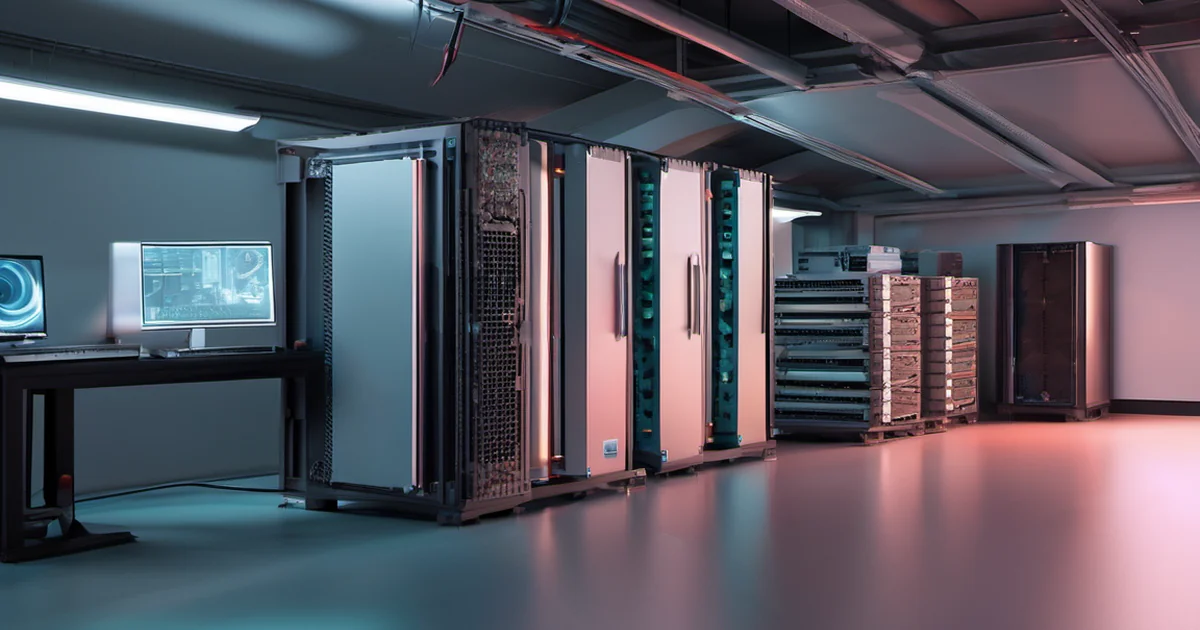
NVIDIA GPU Inventory and Refurbishment Practices
Abacus Hardware offers new and certified refurbished NVIDIA GPU architectures, including HGX A100 and H100 clusters, L40S, and PCIe cards, designed for high-performance computing tasks such as large language model training and real-time inference engines www.abacushardware.com. Refurbished units undergo full burn-in testing, NVLink/NVSwitch recertification, and include a 3-year warranty www.abacushardware.com. Each GPU is subjected to 100% thermal and stress diagnostics, including CUDA stress tests and memory bit-error checks under sustained load www.abacushardware.com. By extending the lifecycle of high-efficiency silicon, Abacus Hardware claims cost savings of up to 50% compared to new hardware MSRP www.abacushardware.com. Active inventory includes certified pre-owned Hopper and Ampere generation cards, with more A100, H100, and L40S hardware entering secondary-market channels as larger systems are upgraded www.abacushardware.com pcserverandparts.com.
Performance and Use Cases for L40S, A100, and H100 GPUs
NVIDIA’s L40S, A100, and H100 GPU accelerators cater to distinct performance and use case requirements. The L40S is optimized for parallel processing arrays, making it well-suited for generative media and edge vision systems. For large language model (LLM) development and dense computing tasks, SXM HGX H100 and A100 clusters provide high memory bandwidth and scalability, ideal for training and fine-tuning foundational models with minimal compute bottlenecks. According to pcserverandparts.com, A100 and H100 remain better suited for tightly-coupled workloads or distributed training that rely on NVLink bandwidth. pcserverandparts.com notes that HBM cards (A100/H100) should be reserved for FP16 dense models and training where memory bandwidth is the limiting factor. These GPUs also support applications in computer vision, quantitative finance, and healthcare, enabling real-time video analytics, low-latency risk simulations, and accelerated genomic mapping, respectively.
Cost Efficiency and Market Trends for Refurbished GPUs
Refurbished NVIDIA GPU accelerators, including the H100, A100, and L40S, are gaining traction in the market due to their cost efficiency and alignment with environmental, social, and governance (ESG) goals. According to industry reports, refurbished hardware can save up to 50% compared to new hardware MSRP while extending the life of high-efficiency silicon. As hyperscalers and AI labs upgrade to Blackwell-generation hardware, older enterprise GPUs are entering the secondary market at 40–70% below new-system pricing, with the exception of the L40S, which retains most of its value due to strong demand for inference workloads. On comparable cloud pricing, the L40S runs roughly 5× cheaper per hour than an H100 SXM, offering a useful proxy for relative value. Additionally, two used L40S cards cost less than a single used H100 and deliver more aggregate VRAM and parallel request streams, making them a compelling choice for production inference.
Technical Specifications and Cooling Requirements
New and refurbished NVIDIA GPU accelerators, including the H100, A100, and L40S, are engineered with advanced technical specifications to support high-performance computing and AI workloads. These GPUs feature High-Bandwidth Memory (HBM3/HBM3e), which helps prevent processing bottlenecks in large-scale models with billions of parameters. The NVLink & NVSwitch interconnect fabric enables seamless GPU-to-GPU communication at up to 900 GB/s bidirectional bandwidth per card, enhancing scalability for complex tasks. Additionally, the Transformer Engine and Tensor Cores optimize mixed-precision computational pipelines for FP8, FP16, and INT8 operations. Cooling requirements for data-center cards like the L40S, A100, and H100 are passive, relying on server chassis airflow rather than onboard fans. Power consumption is significant, with four L40S GPUs drawing approximately 1.4 kW, and a fully loaded 2U node reaching 2–2.7 kW.
Pricing and Market Availability of L40S and H100 GPUs
The market for NVIDIA’s L40S and H100 GPU accelerators shows distinct pricing and availability trends. According to Alibaba.com, wholesale pricing for these units ranges from $7,500 to $10,000, with lead times of two to four weeks, as noted by Fluence Network. The L40S has emerged as a cost-effective alternative, delivering 50–70% of the H100’s performance at about 25% of the price, making it a preferred choice for production inference tasks. In contrast, the H100 and A100 are priced at 4x and 2.6x the cost of the L40S, respectively, highlighting a significant price disparity. While the H100 and A100 offer high performance, newer architectures are beginning to provide improved performance profiles, as indicated by industry reports. These pricing dynamics reflect the evolving landscape of GPU demand and the strategic positioning of different models for specific use cases.
Sources and reporting notes
Based on published source material. No independent hands-on testing is claimed.



