minUS: Open-Source Ultrasound Platform for Development and Research
The minUS platform is a low-cost, open-source ultrasound pulse-echo system built around a PIC32 microcontroller, offering a development environment for ultrasound applications with hardware and firmware resources available for easy production and experimentation.
Hardware and Development Overview
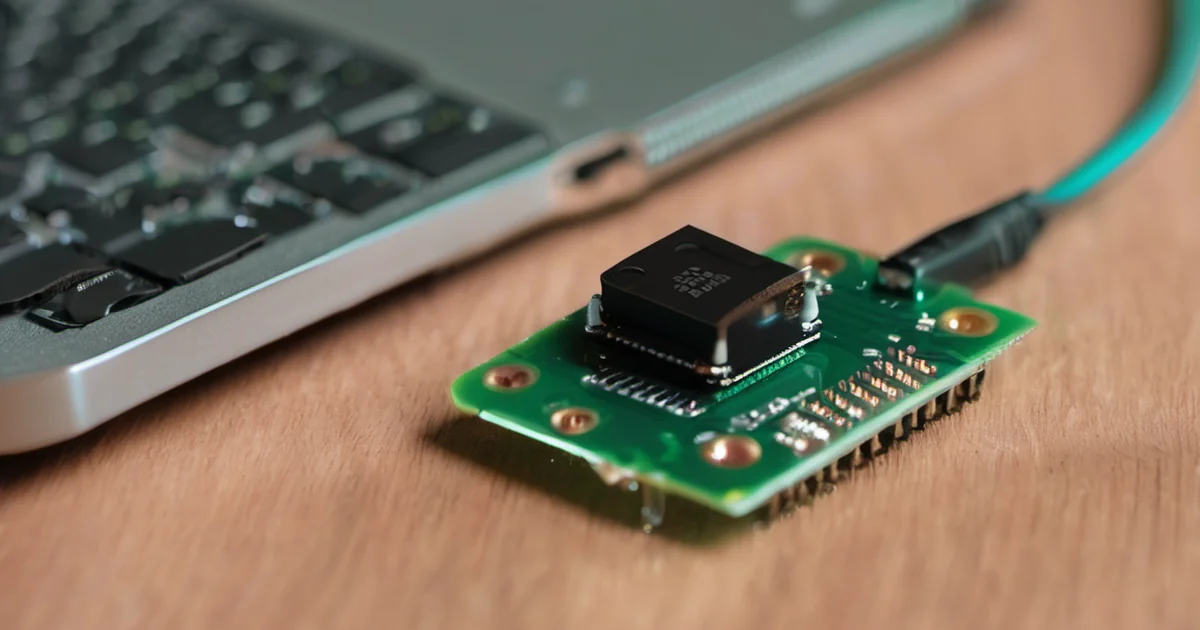
The minUS platform is a single-channel, low-cost, open-source ultrasound pulse-echo system designed as a conference-workshop badge. It is built around a PIC32 microcontroller and offers a minimal yet functional development environment for ultrasound applications. The hardware design is available as a KiCad project, including Gerbers, BOM, and 3D renders, facilitating easy production through services like JLCPCB. Firmware development is supported for both the PIC32 and RP2354 microcontrollers, with source code and built images available in the repository. This setup enables developers to experiment with ultrasound signal processing and hardware integration without requiring extensive prior experience in medical imaging or high-frequency electronics.
Software and Firmware Details
The minUS platform supports both PIC32 and RP2354 microcontroller architectures, with firmware sources available in the firmware/ directory. The PIC32 implementation uses XC-DSC toolchains via MPLAB X, with build paths specified by make -C firmware/pic32 info. The RP2354 version leverages the Pico SDK, with a CMake-based build process that generates a UF2 file for deployment. A key dependency is the integration of PIC firmware into the RP2354 image, achieved through tools/hex2c.py, which converts the PIC hex file into a C source file for embedding. Build outputs are committed in */build/, with version details documented in VERSIONS.md. This modular approach allows developers to choose between architectures while maintaining compatibility between firmware components.
Known Limitations and Performance
The minUS platform, while promising for open-source ultrasound development, has several known limitations that users should be aware of. According to the datasheet errata, the sample-comb phase (E3) can cause the pulse to fall anywhere within a 40 ns sample window between shots, and in 14–31 % of captures, the comb slips by a whole sample during the capture. Additionally, the ADC slow lock (E2) is detected on the PIC, which triggers pe and acq re-shoot automatically. Finally, the link speed between MCUs is limited to 115 200 Bd, resulting in a 0.9 s end-to-end time for a 4095-sample shot. These factors may impact the platform's suitability for real-time or high-precision applications.
Build and Flashing Instructions
To build and flash the minUS platform, start by compiling the PIC32 firmware using the command make -C firmware/pic32, which generates a hex file at firmware/pic32/build/minus_pic.hex. For the RP2354 firmware, use cmake -S firmware/rp2354 -B firmware/rp2354/build -G Ninja -DCMAKE_BUILD_TYPE=Release, followed by cmake --build firmware/rp2354/build -j to produce the minus_rp.uf2 file. The RP image embeds the PIC hex file via tools/hex2c.py, which generates build/pic_image.c. To flash the PIC32 using a Microchip tool connected to J1, run make -C firmware/pic32 flash TOOL=SNAP, with options for other tools like PKBASIC or ICD5. The default LED color is green at 25% brightness, as specified in the firmware for the PIC32AK1216GC41048 model.
Credits and Dependencies
The minUS project acknowledges the foundational work of Luc Jonveaux (kelu124) and contributors such as echomods/Murgen, un0rick, lit3rick, and pic0rick, who provided the open single-channel ultrasound work upon which minUS is built [Hacker News Show]. Earlier materials, including requirements, trade studies, system surveys, reference designs, devkits, intermediate boards, and source PDFs, were removed on 2026-11-19 to streamline the project’s focus [Hacker News Show]. It is important to note that minUS is intended for non-clinical use only, specifically for research, education, and non-destructive testing (NDT) purposes, and is not classified as a medical device [Hacker News Show].
Sources and reporting notes
Based on published source material. No independent hands-on testing is claimed.



