Intel Launches D-Series AI Server GPU Based on Crescent Island Architecture
Intel's newly named D-Series AI server GPU, based on the Crescent Island architecture, features 32 Xe cores, 256 XMX engines, and 480GB of LPDDR5X memory, targeting AI inference workloads with a 350W TDP.
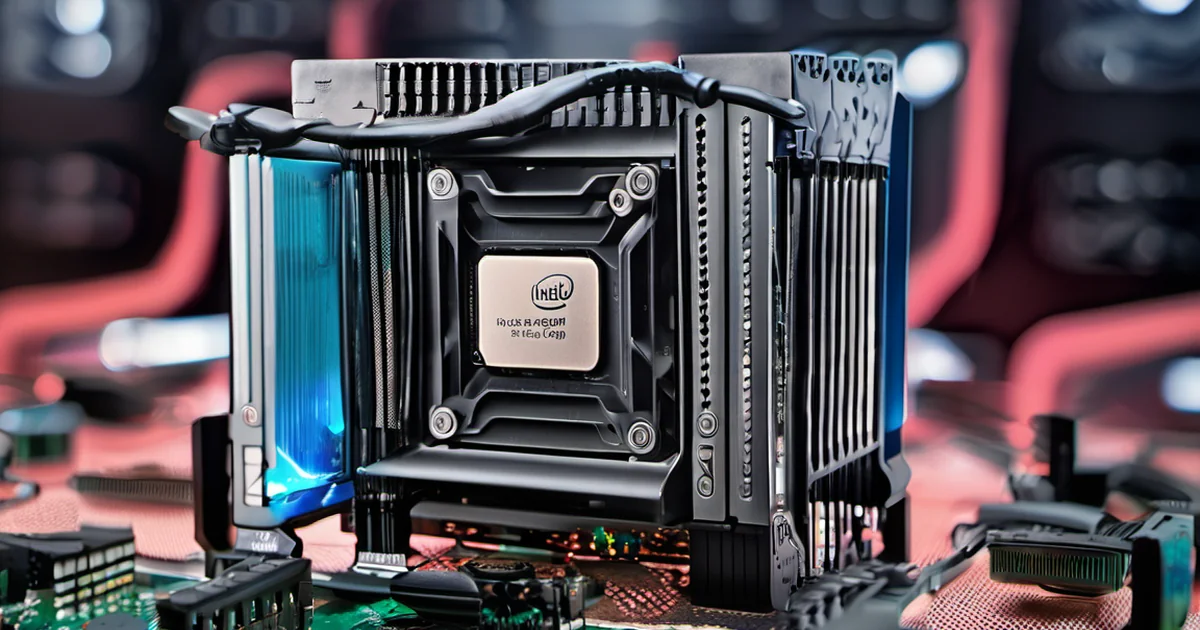
Introduction and Background of Crescent Island
Intel’s Crescent Island AI Server GPU, now officially named the Intel GPU D-Series, marks a significant step in the company’s ongoing efforts to strengthen its presence in the AI inference market. Announced at this year’s Open Compute Project Global Summit, the D-Series is positioned as an interim solution following the cancellation of two prior projects, Rialto Bridge and Falcon Shores. As the first commercial AI-focused data center GPU since Ponte Vecchio in 2021, Crescent Island aims to deliver improved performance while addressing concerns around cost and power efficiency. The product is designed to meet the growing demand for AI inference workloads in data centers, offering a tailored solution for enterprises and cloud providers. Intel’s decision to rebrand the project as the D-Series highlights its focus on delivering a scalable and optimized product for AI inference, with details on its architecture and capabilities expected to be revealed in the coming months.
Specifications and Performance of the Intel GPU D270
The Intel GPU D270, part of the newly named Intel GPU D-Series, is based on the Crescent Island architecture and features 32 Xe cores and 256 XMX engines. It operates at a peak clockspeed of approximately 2.5GHz, delivering 1.3 PFLOPS of FP8 matrix throughput and 10.2 TFLOPS of FP64 vector throughput. The card supports up to 480GB of LPDDR5X memory (as offered by ODMs) and 160GB by Intel, with a memory bandwidth of 1.5TB/sec. It includes ECC support, 32MB of L2 cache, and PCIe Gen5 x16 I/O, with a TDP of 350W and a PCIe CEM form factor suitable for air cooling.
According to Intel, the D270’s FP8 matrix performance is 1.3 PFLOPS. For comparison, AMD’s MI350P accelerator, which also uses a PCIe CEM form factor, offers a theoretical peak of 2.3 PFLOPS of dense FP8 matrix math, as noted by AMD. The MI350P’s highest performance configuration, however, requires 600 Watts, compared to the D270’s 350W TDP.
Memory Configurations and Market Positioning
Intel’s Crescent Island AI Server GPU, now officially branded as the Intel GPU D-Series, is set to offer a range of memory configurations. According to Intel, ODM partners will be able to provide versions with up to 480GB of memory, enabled by 24GB LPDDR5X chips—an unprecedented capacity for a PCIe form factor accelerator. This flexibility in memory options positions the D-Series to cater to a variety of AI workloads. Intel has emphasized the card’s efficiency on a performance-per-watt basis, suggesting that its target market may prioritize power efficiency over raw speed. This approach aligns with Intel’s broader strategy to appeal to data centers and AI environments where energy consumption is a critical factor. The D-Series is expected to compete with other high-end PCIe accelerators, though its unique memory capabilities may set it apart in specific use cases.
Naming and Launch of the Intel GPU D-Series
Intel has officially named its Crescent Island AI server GPU line as the Intel GPU D-Series, marking a new brand identity for its data center AI inference cards. The first and currently only card in the series is the GPU D270, which has been revealed in official renderings. While specific performance metrics and launch dates have not been detailed in the available information, the naming signifies Intel's continued investment in AI acceleration for data center environments. The D-Series is expected to compete with other high-performance GPU solutions targeting AI inference workloads. Further details about the GPU D270's capabilities, including its architecture and supported AI frameworks, are anticipated in upcoming announcements from Intel.
Additional Context and Linux Support
Intel’s GPU D Series, part of the Crescent Island AI server platform, is designed with agentic AI workloads in mind. According to phoronix.com">Intel, each card features 32 Xe3P cores, 256 XMX Xe3P matrix engines, 480GB of LPDDR5X memory, and a 350 Watt air-cooled rating, connected via PCI Express 5.0. In terms of software support, phoronix.com">Linux driver development has been progressing well upstream, suggesting robust open-source compatibility when the hardware reaches scale. This aligns with Intel’s broader strategy to ensure strong ecosystem support for its AI accelerators. While specific performance benchmarks have not been disclosed, the hardware specifications indicate a focus on high-capacity, high-performance AI inference and training scenarios. The company has not yet provided details on pricing or availability, but the emphasis on Linux support highlights its commitment to open-source communities and enterprise environments.
Sources and reporting notes
Based on published source material. No independent hands-on testing is claimed.