Hugging Face Launches LeRobot for Open-Source Robotics Development
LeRobot is an open-source machine learning library from Hugging Face designed to make AI and machine learning more accessible for real-world robotics applications using PyTorch.
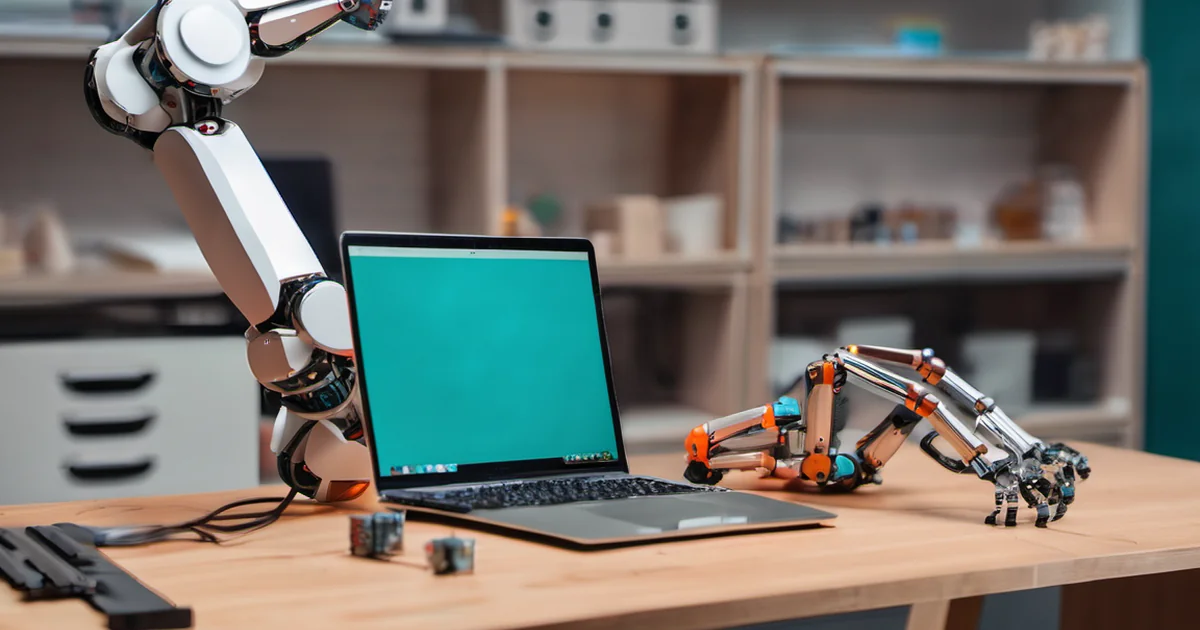
Overview of LeRobot
Hugging Face has launched LeRobot, an open-source machine learning library designed for real-world robotics applications using PyTorch. As described in the project overview, LeRobot aims to make state-of-the-art AI and machine learning more accessible to the robotics community. The platform builds on Hugging Face's expertise in democratizing AI by offering pre-trained models, datasets, and tools tailored for robotic manipulation and control tasks. This initiative reflects a broader effort to bridge the gap between AI research and practical robotics implementation. LeRobot is positioned as a resource for developers and researchers seeking to advance real-world robotic systems through open-source collaboration.
Key Features and Components
LeRobot offers pre-built, affordable robot platforms such as the SO-101 (€114), HopeJR humanoid arm, and LeKiwi mobile robot, along with pretrained models hosted on HuggingFace Hub. The platform includes human-collected demonstration datasets and simulation environments like ALOHA, PushT, and SimXArm, enabling rapid training and real-world transfer of robotic skills. According to robotics.growbotics.ai, LeRobot emphasizes ease of use, reproducibility, and community collaboration, allowing researchers and developers to deploy advanced AI capabilities on physical robots efficiently. These features are designed to lower the barrier to entry for robotics development and foster innovation through shared resources and open collaboration.
Impact and Significance
LeRobot is making significant strides in the field of robotics by bridging the gap between advanced AI research and real-world applications. As noted, it is doing for robot learning what Hugging Face Transformers did for natural language processing — offering a unified, accessible framework that lowers the barrier to entry for researchers and developers. With pre-built affordable hardware, shared datasets, and pre-trained models available on the Hub, LeRobot is rapidly becoming the standard starting point for robot learning research. This shift is transforming how robotic systems are developed, enabling more widespread innovation and collaboration in the robotics community.
Problem Addressed by LeRobot
LeRobot addresses a critical challenge in robot learning research: the fragmentation of tools and codebases across the field. As noted in robotics.growbotics.ai, this fragmentation makes it difficult to reproduce results or compare different methods. LeRobot standardizes the training and evaluation pipeline, as stated in robotics.growbotics.ai, allowing researchers to focus on algorithm development rather than infrastructure setup. This standardization is a significant step toward improving collaboration and accelerating progress in robotics. By providing a unified framework, LeRobot reduces the barriers to entry for new researchers and facilitates more rigorous scientific comparisons between approaches. The project aligns with broader efforts in open-source robotics, such as those seen in full-stack mobile robotics courses on NVIDIA Jetson, which integrate ROS 2, SLAM, AI perception, and physical AI. These initiatives collectively aim to make robotics research more accessible and reproducible.
NVIDIA Jetson Robotics Course
The NVIDIA Jetson Robotics Course is an open-source, hands-on project designed to help robotics developers, students, and researchers build complete robotic systems. Built around the NVIDIA Jetson AGX Orin platform, the course covers key areas such as sensor integration, perception, autonomous navigation, and intelligent interaction. Modules include topics like AI perception, edge acceleration, LiDAR-based SLAM, and Vision-Language Navigation (VLN). The project provides open-source tutorials, practical examples, and real-world robotics experiments on Jetson, with code, configurations, and implementation guidance available in both English and Chinese. As of now, 6 out of 11 planned modules are completed, with continuous updates planned. The course developers welcome feedback from the Jetson and robotics community to improve the learning experience.
Sources and reporting notes
Based on published source material. No independent hands-on testing is claimed.



