Google Launches 'Polar Peaks' AI Quest for Students Aged 11-14
Google Research and Stanford Accelerator for Learning launched 'Polar Peaks,' an AI Quest for students aged 11-14, focusing on AI and neuroscience to enhance critical thinking and problem-solving skills.
Overview of the AI Quests Program and 'Polar Peaks'
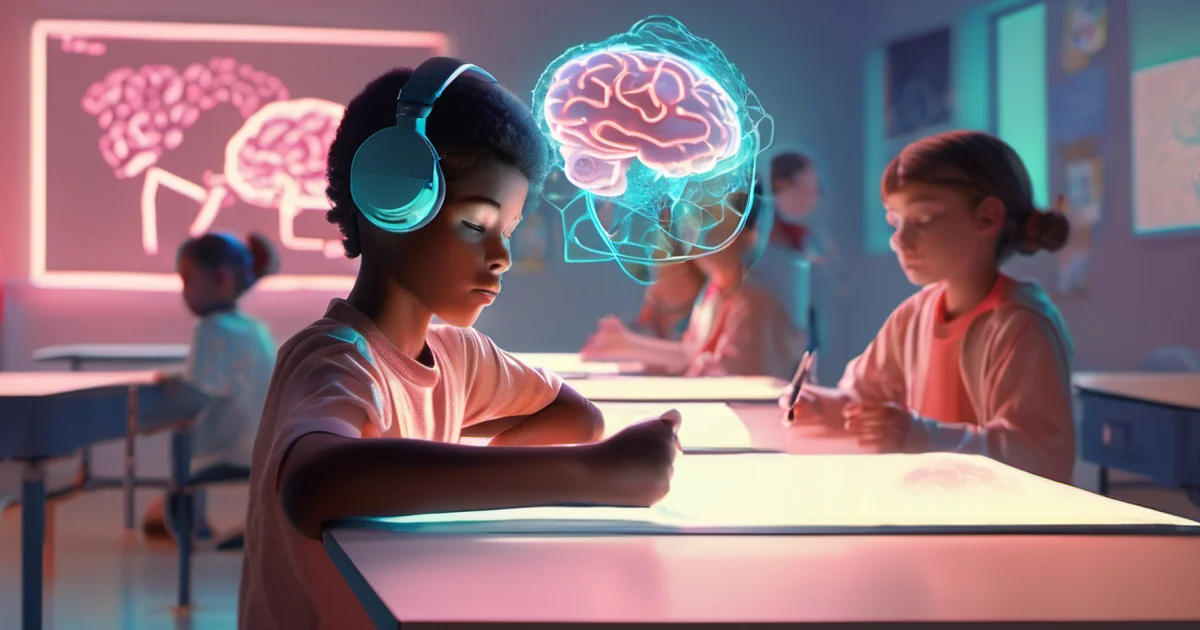
Google Research, in collaboration with the Stanford Accelerator for Learning, has launched “Polar Peaks,” the third installment in the AI Quests series. Designed for students aged 11 to 14, this initiative immerses participants in the role of researchers, challenging them to explore how AI can be applied to some of humanity’s most complex problems. “Polar Peaks” specifically focuses on the intersection of AI and neuroscience, guiding students through the frontiers of brain research and demonstrating how AI can accelerate scientific discovery. The program aims to educate young learners on the fundamentals of AI while emphasizing responsible use. As generative AI remains experimental, the quest provides a structured and engaging environment for students to develop critical thinking and problem-solving skills in a rapidly evolving field.
Educational Objectives and Student Engagement
The AI Quest: Mapping the Human Brain introduces educational objectives that blend neuroscience with artificial intelligence. Students engage with in-game mentors to scan and map neurons, helping game characters overcome memory loss, as described in the quest's design (Google AI Blog). Through tasks such as data cleaning and model testing, learners experience the importance of human oversight and critical thinking in AI development (Google AI Blog). This quest draws inspiration from over a decade of research in connectomics, the science of mapping neural networks in the brain (Google AI Blog). By integrating real-world scientific concepts with interactive gameplay, the quest aims to deepen student understanding of both neuroscience and AI, while fostering engagement through hands-on learning experiences.
Teacher Support and Curriculum Integration
Teacher support and curriculum integration are central to the success of AI Quests, an initiative aimed at mapping the human brain through interactive learning. According to Google AI Blog, training modules are being developed to equip educators with tools for teaching AI literacy. These modules are designed to help teachers incorporate AI Quests into their existing classroom curriculum effectively. As noted in Google AI Blog, new dedicated teacher training modules are being rolled out to reinforce key AI literacy concepts and facilitate learning and discussion through AI Quests. Earlier this year, AI Quests received recognition for its educational impact, winning a 2026 Webby Award for AI Education, Learning & Training, and Best Global K–12 Learning Solution at the ETIH Innovation Awards, as stated in Google AI Blog.
Real-World Applications and Scientific Inspiration
The "Polar Peaks" AI Quest introduces students to real-world applications of artificial intelligence through the lens of neuroscience. Inspired by initiatives such as Google Research’s Flood Forecasting and AI models for diabetic retinopathy screening, this lesson emphasizes the practical impact of AI in solving complex challenges. In the quest, students engage with the scientific inspiration behind these innovations, including insights from researchers who have contributed to major breakthroughs, such as the recent mapping of the complete fruit fly brain—the largest brain map by number of neurons to date. This quest not only fosters AI literacy but also encourages students to explore the intersection of technology and biology, highlighting how AI can be applied to understand the human brain and beyond.
Global Reach and Impact of AI Quests
The global reach and impact of AI Quests continue to expand, with more than 400,000 quests completed to date and localized into 10 languages . These interactive learning experiences are now supported by new training modules designed specifically for teachers, enhancing their ability to integrate AI education into classrooms . Earlier this year, AI Quests received recognition for its contributions to AI education, winning a 2026 Webby Award for AI Education, Learning & Training, and Best Global K–12 Learning Solution at the ETIH Innovation Awards . These achievements highlight the growing influence of AI Quests in shaping how students and educators engage with artificial intelligence on a global scale.
Sources and reporting notes
Based on published source material. No independent hands-on testing is claimed.



