Gemini Robotics 2.5 Advances in Dexterity and Industrial Applications
Gemini Robotics 2.5 demonstrates significant improvements in dexterity, achieving a 96% success rate in pilot projects and real-world testing in automotive production environments.
Advancements in Dexterity and Task Performance
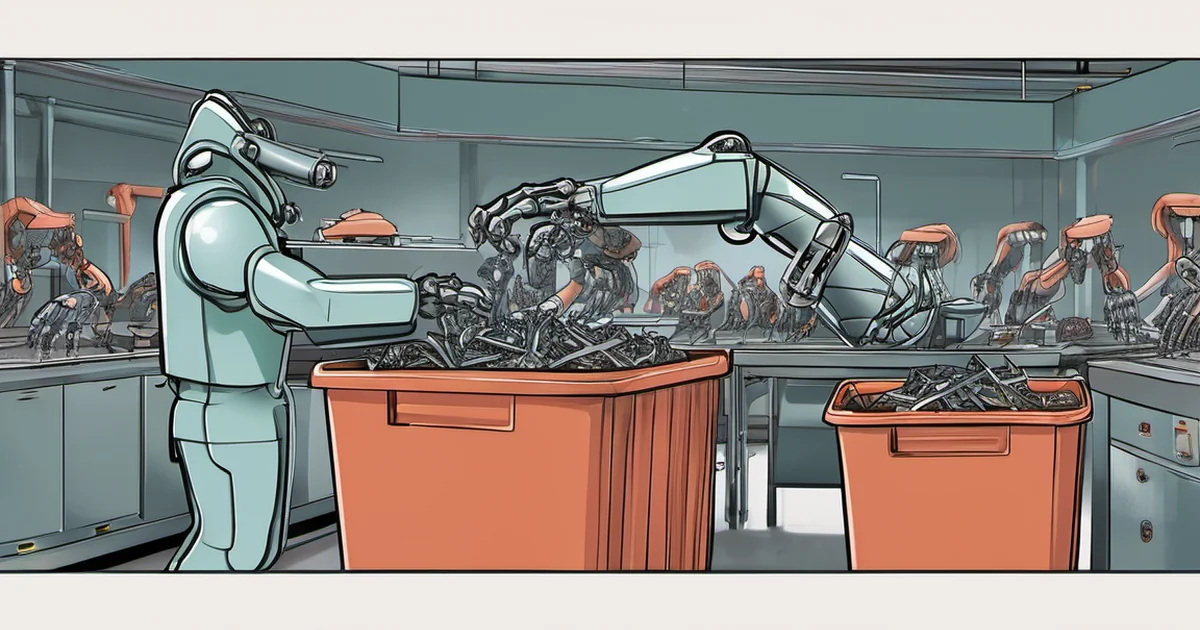
Gemini Robotics 2.5 marks a leap forward in three key areas, according to the company. Dexterity has seen significant improvements, enabling robots to perform a wider range of tasks with greater precision — from using everyday tools to handling delicate, flexible objects. The system uses an embodied reasoning model (Gemini Robotics ER) to track workflow and the Gemini Robotics 2.5 actions model to control hands and arms, allowing the robot to reach into supply bins, pick up metal automotive brackets, and place them into sequencing containers while correcting for any gaps. In a pilot project, the system achieved a 96% success rate, as reported by Gemini Robotics, demonstrating promising progress toward real-world industrial applications.
Real-World Testing and Industrial Applications
Real-world testing of Gemini Robotics 2.5 has taken place in active automotive production environments, including facilities in Kecskemét, Hungary, and Sindelfingen, Germany. In collaboration with Apptronik and Mercedes-Benz, the Apollo 2 humanoid robots were deployed on production lines to evaluate the model’s performance in dynamic, industrial settings. According to Google DeepMind, the integration of Gemini Robotics 2.5 with the Apollo 2 robots led to significant improvements in functionality during post-training phases, with minimal performance degradation when applied to Mercedes-Benz production tasks. These tests highlight the model’s adaptability and reliability in complex, real-world scenarios. The results suggest that Gemini Robotics 2.5 is making strides in general dexterity, though specific performance metrics remain unquantified in the provided evidence.
Safety and Reliability Improvements
Safety and Reliability Improvements in Gemini Robotics 2.5 focus on reducing risks during real-world operations. According to the developers, the system now uses inference-time reasoning guidance to steer around physical hazards in real-time, enhancing its ability to avoid dangerous situations as they arise. These advancements are part of a broader effort to ensure the technology can be deployed safely in complex environments. Additionally, the system’s jailbreak resistance has been improved, with Argon achieving a 99.5% rate, as reported by the publisher, a significant increase from the 82% rate of the previous baseline, Gemini Robotics ER 2.
Role of Gemini 4 Argon in Accelerating Development
The development of Gemini Robotics 2.5 was significantly accelerated by the capabilities of Gemini 4 Argon, which acted as a powerful simulation engine. According to Google DeepMind, Gemini 4 Argon helped solve key bottlenecks in robotics research by enabling the generation of thousands of varied, simulated practice runs from real-world camera scenes. This capability allowed researchers to build realistic digital twins, greatly speeding up the training and refinement of new robotic skills. Google DeepMind highlights how this process enabled the creation of more adaptable and general-purpose dexterity in Gemini Robotics 2.5. By reducing reliance on physical data collection and improving modeling efficiency, Gemini 4 Argon played a pivotal role in advancing the system’s ability to perform complex, human-aware tasks. These advancements were made possible through the integration of simulation-based training, as noted in Google DeepMind, which enabled safer and more effective robot actions.
Path Toward Physical AGI and Future Implications
Gemini Robotics 2.5 represents a significant step forward in the development of physical artificial general intelligence (AGI), accelerated by frontier intelligence models like Gemini 4 Argon, according to Google DeepMind. This advancement focuses on improving real-world dexterity, reliability, and safety, as noted in Google DeepMind. These improvements are essential for enabling robots to operate effectively alongside humans and address complex physical challenges. The Gemini Robotics team has been instrumental in this progress, building upon previous milestones such as Gemini Robotics 1.5, which introduced AI agents into the physical world in September 2025, and Gemini Robotics 2, which brought whole body intelligence to robots in July 2026. As the technology continues to evolve, its implications for industries and everyday life remain an area of active exploration.
Sources and reporting notes
Based on published source material. No independent hands-on testing is claimed.



