Fiber-Optic Drones in Ukraine Face Supply Chain and Operational Challenges
Fiber-optic drones in Ukraine offer resistance to jamming but face supply chain issues due to global demand for fiber-optic cable driven by AI data centers and competition with Russia.
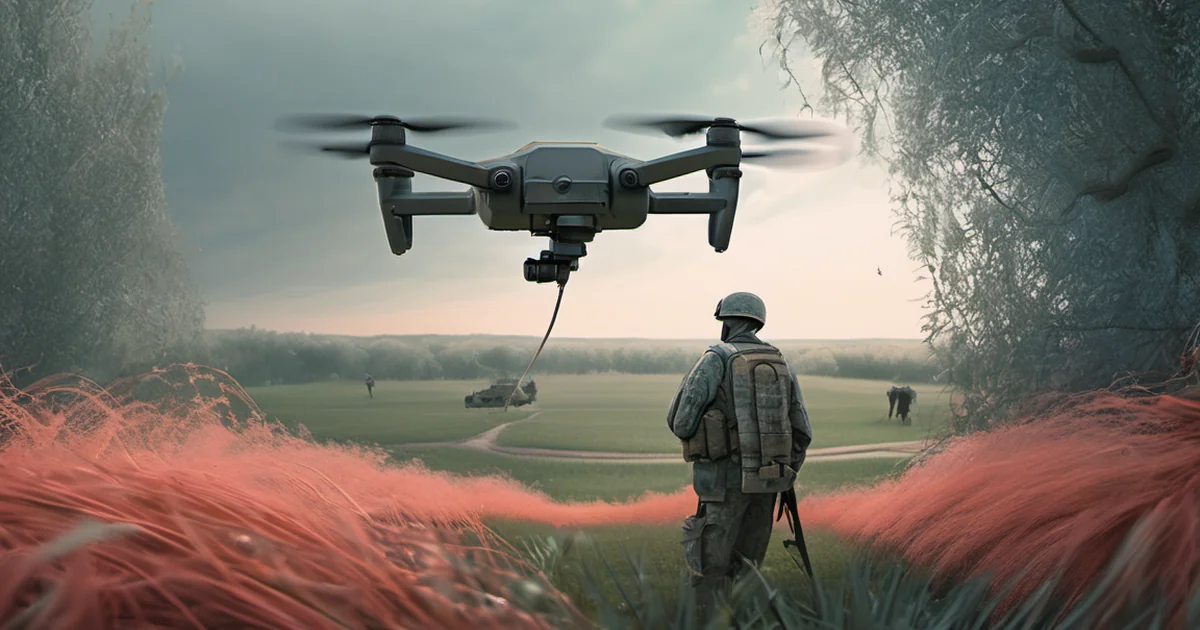
Fiber-optic drones in Ukraine and their operational capabilities
Fiber-optic drones in Ukraine have emerged as a critical tool in modern warfare, offering a unique advantage due to their resistance to battlefield jamming. These drones are physically connected to human operators via miles of fiber-optic cables, which are thinner than fishing lines. As reported by the independent Russian publication The Insider, the finished spools can hold enough fiber-optic cable for drones to operate at ranges of dozens of miles, with some reaching up to 62 miles (100 kilometers) in extreme cases. The widespread use of these drones has led to fields and trees being strewn with tangled cables. Ukraine and Russia have been producing an estimated 50,000 fiber-optic drones per month in recent years, according to available reports.
Global supply chain challenges and competition for fiber-optic cable
Global supply chain challenges and competition for fiber-optic cable have placed additional strain on Ukraine’s efforts to produce fiber-optic drones. Importing such materials from China has become more costly as drone warfare’s needs compete with global demand from AI data centers for the same limited supply—and so Ukrainian drone makers have been adapting. Meanwhile, China’s economic and security ties with Russia have enabled Russia to import significantly larger amounts of fiber-optic cable than Ukraine. According to The Washington Post, Russia imported 328,000 miles of fiber-optic cable from China in August 2025 alone, compared to Ukraine getting just 72 miles of cable from Chinese companies.
Impact of AI and data centers on fiber-optic demand and pricing
The global AI boom and ongoing data center buildout have also strained optical fiber supply, with an expected worldwide shortfall of 111 million miles (180 million kilometers) in 2026, according to the market research firm TrendForce. This increased demand has further elevated the cost of optical fiber purchased by Russia and Ukraine, including the bend-insensitive fiber that is especially coveted for fiber-optic drones. If we compare fiber-optic prices in 2025 and 2026, we have seen increases of roughly six to 10 times. These developments highlight the growing tension between AI infrastructure expansion and the availability of critical materials for specialized applications such as fiber-optic drones.
Operational limitations and specialized use of fiber-optic drones
Fiber-optic drones are a specific type of drone used for particular operations, as noted by Oleksiy. These drones are designed to function in challenging environments, where traditional communication methods may be unreliable. However, they also have their own operational limitations, which must be taken into account during deployment. Fiber-optic technology provides a way to operate in these conditions, although it also comes with certain limitations, such as the need for direct line-of-sight and susceptibility to physical obstructions. Due to these constraints, fiber-optic drones are typically employed in specialized scenarios, such as short-range reconnaissance or secure data transmission in controlled areas. Their use is not widespread and is often restricted to situations where their unique capabilities outweigh their limitations. As AI-driven data center demand continues to grow, the specialized nature of fiber-optic drones may further limit their applicability in broader operational contexts.
Current battlefield usage and comparison with radio-controlled drones
Currently, fiber-optic drones are being used on the battlefield by both Ukrainian and Russian forces, though radio-controlled drones remain more prevalent. According to industry insiders, the transition to fiber-optic technology is still in its early stages, with many operators relying on traditional radio control due to its established reliability and lower cost. Fiber-optic drones offer advantages such as reduced signal interference and greater data transmission capacity, but their adoption is being slowed by supply chain constraints. Meanwhile, global demand for fiber-optic cable is rising sharply, driven in part by the expansion of AI data centers, which consume vast amounts of fiber to support high-speed computing needs. Some manufacturers are adapting by purchasing large spools of fiber-optic material and repurposing them into smaller spools tailored for use in fiber-optic drones, highlighting the growing intersection between military and commercial fiber-optic applications.
Sources and reporting notes
Based on published source material. No independent hands-on testing is claimed.



