AMD Unveils Helion Racks for Agentic AI at OCP Summit 2026
AMD introduced Helion racks at OCP Summit 2026, offering scalable AI infrastructure with CPU and GPU configurations, up to 32,768 Zen 6 cores, and 102 Tbps networking bandwidth.
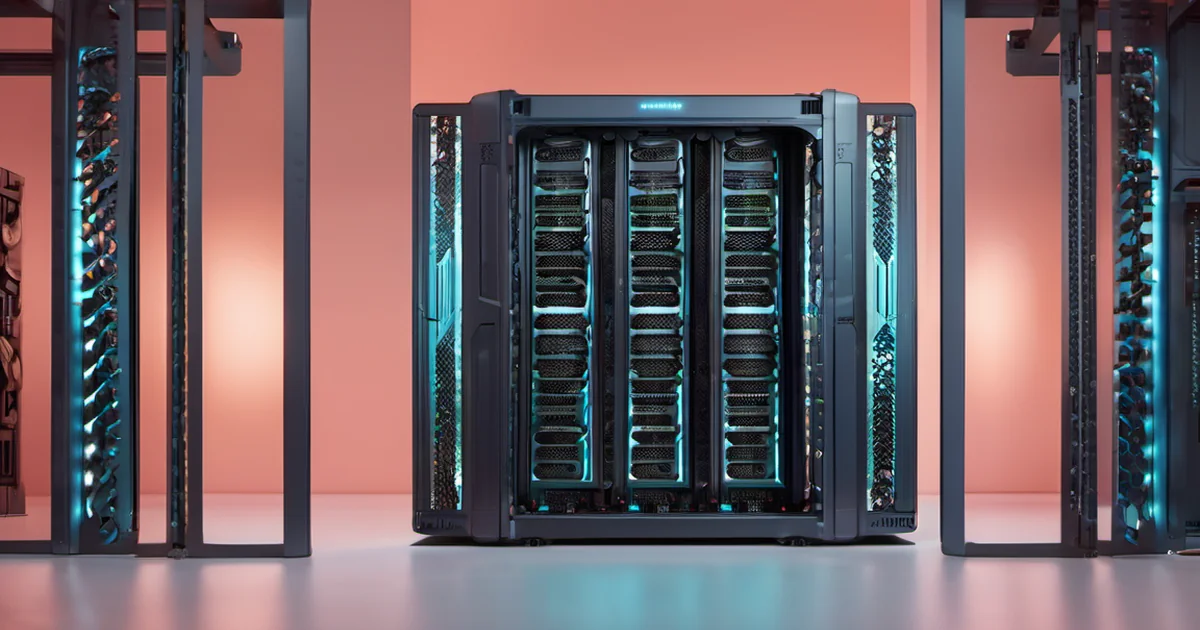
Introduction to AMD's Helion Racks at OCP Summit 2026
At the Open Compute Project (OCP) Summit 2026 in San Jose, California, AMD unveiled its new Helion rack reference design, a blueprint for agentic AI infrastructure. The system is built around AMD's CPUs and accelerators and is OCP-compliant. This follows the launch of AMD's Helios system earlier this year, which was designed for frontier-scale AI training and large-scale inference. The Helion rack-scale AI system aims to provide a scalable and efficient solution for organizations deploying AI agents. While the naming of Helion and Helios may invite some confusion, AMD's focus remains on delivering robust infrastructure tailored for the evolving needs of AI workloads. The Helion design is part of AMD's ongoing efforts to support the growing demand for AI computing resources.
Configuration Options for Helion Racks
AMD presented two configuration options for its Helion racks at the OCP summit, catering to different AI agent deployment needs. Customers can choose between a CPU-only hyperscale configuration or an enterprise configuration that integrates CPU and GPU blades. The CPU-only version is designed for dedicated agent execution and connects to separate model inference infrastructure, while the enterprise setup combines agent execution, GPU inference, and supporting workloads within a single rack. Both configurations provide flexibility with dense, balanced, or high-performance CPU blade options, allowing organizations to tailor their infrastructure to specific workload requirements. These choices reflect AMD’s focus on scalability and adaptability in AI infrastructure solutions.
Technical Specifications and Performance Capabilities
At the OCP summit, AMD introduced Helion racks tailored for AI agents, featuring technical specifications that highlight their scalability and performance. Depending on the configuration, these racks can support up to 32,768 of AMD's "Zen 6" CPU cores, delivered via compute nodes equipped with 256-core versions of its Venice Epyc processor (The Register). The system also accommodates up to 16 Instinct MI350P GPU accelerators and offers up to 102 Tbps of networking bandwidth. For dense deployments, EPYC 9006 chips rated at 400 W are utilized, while performance blades use a version of the chip with 96 cores but clocked at 5 GHz (The Register). Additionally, there are GPU inference blades, featuring eight Instinct MI350P GPUs in a 5U server, alongside general-purpose blades designed for database, storage, or technical compute workloads (The Register).
AMD's Vision for Agentic AI Infrastructure
AMD’s Vision for Agentic AI Infrastructure highlights the company’s approach to supporting the diverse and evolving needs of agentic AI systems. According to AMD SVP for Compute and Enterprise AI Dan McNamara, agentic AI spans a range of enterprise applications and complex workflows, each requiring distinct compute resources. "To do that takes optimized compute and infrastructure that can adapt to different workloads," he noted. AMD’s Helion racks aim to address these challenges by integrating Epyc performance, open software, and flexible rack designs. This combination allows partners to build systems tailored to customer requirements while maximizing power efficiency. The Helion initiative reflects AMD’s commitment to providing scalable and adaptable infrastructure solutions for the next generation of AI workloads.
Partnerships and Future Availability of Helion
AMD has outlined its strategy for the future of its Helion racks, emphasizing collaboration with industry partners. According to AMD, the company plans to contribute the Helion specifications to the Open Compute Project (OCP), making them available to the community for further development and adoption. This move is expected to accelerate innovation and ensure broader industry support for the Helion platform. Partner-built Helion configurations are scheduled for availability in November 2026, as stated by AMD. The company has confirmed that major hardware vendors, including Cisco, Dell, HPE, Foxconn, Lenovo, Supermicro, and others, are on board with the initiative. These partnerships are critical for ensuring that Helion meets the diverse needs of data centers and AI infrastructure providers. AMD’s approach highlights its commitment to open standards and ecosystem-driven development.
Sources and reporting notes
Based on published source material. No independent hands-on testing is claimed.



