AI's Role in Mathematics: Tool, Oracle, and Challenge
The integration of AI into mathematics is reshaping the discipline, raising concerns about its opaque insights and potential to alter the role of human mathematicians.
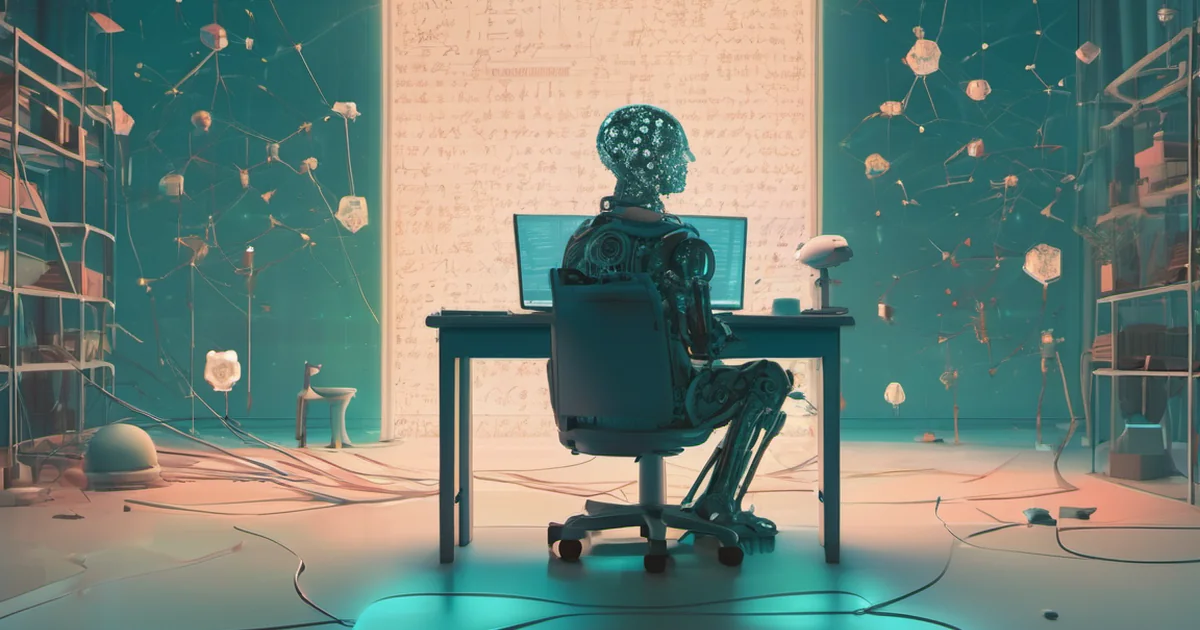
AI as a New Tool in Mathematics
The integration of AI into mathematics is reshaping the discipline, with some viewing it as a powerful new tool. However, the recent surge in AI-generated mathematical content, such as the 722 papers released by OpenAI, has raised concerns among mathematicians. This shift is not merely about automation; it marks a transformation in the role of AI from a servant to an oracle, offering insights that are often opaque and difficult to interpret. Unlike traditional tools, AI-generated results can reveal patterns and conjectures that humans may not have considered, yet they lack the clarity to explain their reasoning. While there is potential for AI to evolve into an effective teaching aid, its current limitations in articulation and understanding remain significant challenges for the field.
The Evolution of Computers in Mathematics
The Evolution of Computers in Mathematics marks a pivotal shift in how humans approach complex problems. In the 1950s, as noted in research, computers transitioned from being mere tools to becoming explorers in the realm of mathematical thought. This change is exemplified by their use in tackling problems that were previously intractable for human minds alone. As described by scholars, these early computers acted as 'scouts,' venturing into uncharted territories of mathematical theory and returning with insights that reshaped the field. This evolution laid the groundwork for future advancements, where computers would not only assist in calculations but also contribute to the formulation of new mathematical concepts. The shift from manual computation to machine-assisted exploration has profoundly influenced the trajectory of mathematical discovery, demonstrating the transformative role of technology in expanding human intellectual capabilities.
The Impact of AI on Mathematical Insight
What happens to mathematics when AI becomes an oracle? In the realm of pure math, the pursuit of absolute proof has long been a defining characteristic, as noted by researchers who emphasize the unique value of human insight . The “aha!” moment—when a mathematician suddenly perceives a pattern after prolonged struggle—represents a form of cognitive breakthrough that is central to the discipline . Even in the face of unsolved problems, the process of grappling with complexity and devising simplified strategies is seen as a hallmark of mathematical thinking . As AI systems grow more capable of assisting with complex calculations and pattern recognition, the role of human insight may shift, but the essence of mathematical discovery remains tied to the interplay between intuition, effort, and creativity.
AI and the Future of Mathematical Practice
What happens to mathematics when AI becomes an oracle? Some mathematicians express concern that the field may lose its human essence as AI tools generate proofs and solutions with increasing speed and accuracy. According to one perspective, young mathematicians may find themselves in a landscape where traditional problem-solving feels obsolete. As noted by a speaker in the tech community, the impact on mathematics is being described as profound, with some suggesting that the subject may appear to be 'over' for a new generation of enthusiasts. This sentiment is echoed by others in creative fields, who observe similar anxieties among students who are now turning to AI for assistance in their work. These concerns highlight a broader debate about the role of AI in intellectual disciplines and the potential for technology to reshape the very nature of human creativity and discovery.
AI as an Explainer and Problem Solver
AI is increasingly being used as an explainer and problem solver in mathematics, offering insights that were previously difficult to obtain. As noted by one researcher, AI can be a very effective explainer when interacting with it, helping to break down complex mathematical concepts into more digestible parts. Unlike traditional puzzles such as Sudoku, mathematical problems often require a deeper understanding of underlying principles rather than just pattern recognition. In some cases, AI is used to generate random maps that adhere to specific legal or mathematical criteria, providing a principled way to explore possibilities without bias. This approach allows for a broader sampling of solutions that meet defined constraints, enhancing both research and practical applications in fields such as cartography and optimization.
Sources and reporting notes
Based on published source material. No independent hands-on testing is claimed.



