AI's Role in Enhancing Medical Imaging and Disease Prediction
AI is increasingly being recognized for its potential to enhance medical imaging and improve disease prediction by interpreting images in ways that humans cannot, enabling earlier interventions and more accurate health issue identification.
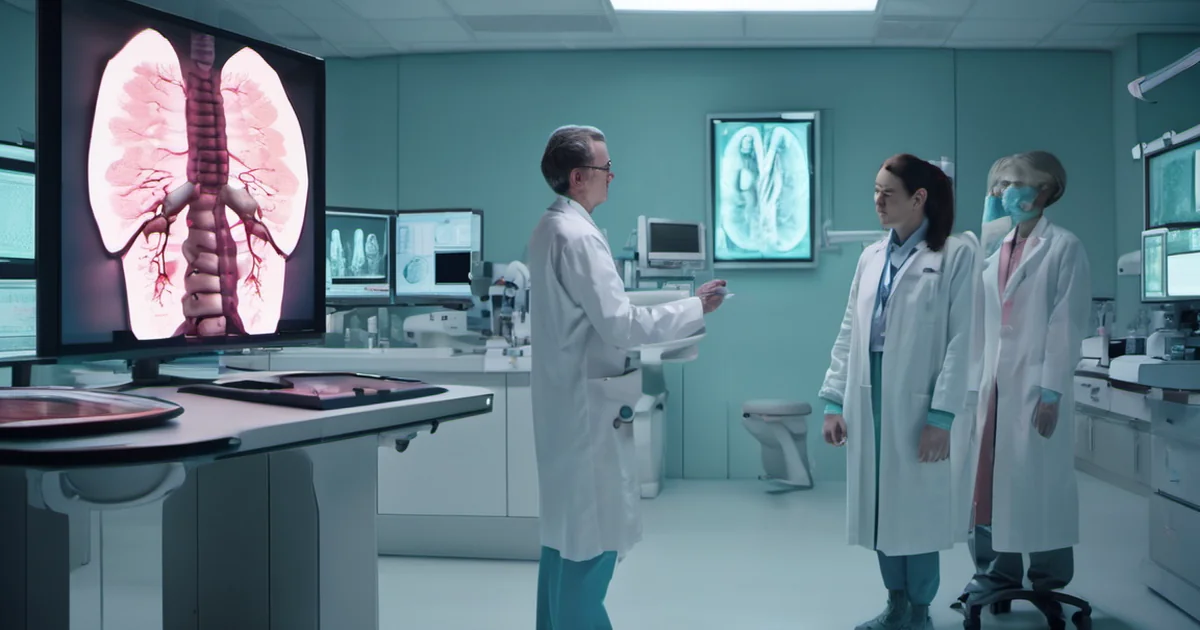
AI's Role in Enhancing Medical Imaging and Disease Prediction
AI is increasingly being recognized for its potential to enhance medical imaging and improve disease prediction. According to research, AI can interpret medical images in ways that humans cannot, extracting valuable information from datasets such as those used in mammography and colonoscopy studies. This capability allows for more accurate identification of potential health issues and could lead to earlier interventions. As noted by experts, AI models already show promise in predicting disease timelines, offering insights that could transform medical care. However, the full potential of AI in this field remains untapped, with current implementations only scratching the surface of what is possible. The integration of AI into medical practices is still evolving, and its impact will depend on how effectively these technologies are adopted and refined.
Collaborative Research Between AI and Biomedicine
Collaborative research between AI and biomedicine is opening new frontiers in healthcare innovation. For example, through our collaboration with the Broad Institute, where we’re really trying to build bottom-up a joint research endeavor that marries both the AI side and the biological side. Such partnerships enable the development of advanced models that can simulate biological processes and predict responses to various perturbations, which could aid in drug discovery and deepen our understanding of complex biological systems. TOPOL notes that these capabilities could help unravel a lot of biology and support the development of more effective treatments. While the path to fully mature whole-patient models remains ongoing, researchers are optimistic that progress in this area will lead to significant advancements in personalized medicine and disease prevention.
Challenges in Modeling Human Health and Complexity
Modeling human health at the individual level remains a significant challenge for AI systems. As noted by researchers, current capabilities are limited when it comes to creating accurate virtual human models. At the patient level, existing AI tools are described as 'so weak right now,' highlighting the gap between theoretical potential and practical application. While progress has been made in areas such as polygenic risk scores and genome sequencing, these tools can only provide a partial understanding of complex conditions like heart disease. Researchers acknowledge that achieving comprehensive models capable of simulating all possible cellular interactions is unlikely, given the vast diversity of cell types and their intricate relationships within the body. These limitations underscore the need for continued innovation and interdisciplinary collaboration to advance the field of AI-driven health modeling.
The Need for Interpretability and Causal Models in AI Healthcare Applications
As AI becomes increasingly integrated into healthcare, the need for interpretability and causal models in AI applications has become critical. Experts emphasize that managing the complexity of AI inferences and data collection requires techniques that allow for clear understanding and actionable insights. This includes developing methods to interpret AI outputs and establish causal relationships that can guide interventions. While current research explores the integration of electronic health records with lifestyle data and polygenic risk scores, there is still much to uncover. As noted by TOPOL, the opportunity lies not just in identifying risk, but in enabling meaningful prevention strategies that have been historically underutilized in healthcare. These advancements require careful attention to both intra-level and cross-level interactions within health systems to ensure AI tools are effective and trustworthy.
Sources and reporting notes
Based on published source material. No independent hands-on testing is claimed.



