Agent Compute Engine's Architecture and Security Features
Agent Compute Engine introduces hardware-isolated microVMs with container-speed performance and security pillars like hardware-rooted trust and strict separation between agent harness and sandbox.
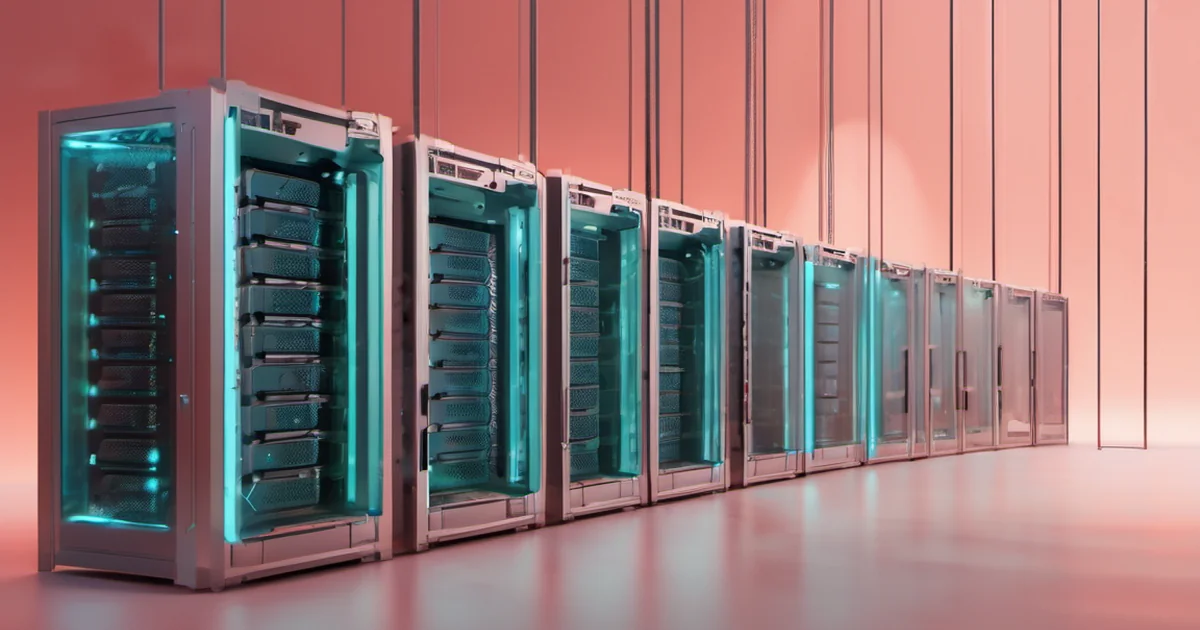
Agent Compute Engine's Architecture and Security Pillars
Agent Compute Engine introduces a new form factor designed to provide AI agents with dedicated, hardware-isolated microVMs that operate with container-speed and without holding any credentials inside the sandbox cloud.google.com. To securely run autonomous workloads at scale, the service is built on a defense-in-depth architecture anchored in several security pillars cloud.google.com. One key pillar is hardware-rooted trust, which leverages Google's custom Titan silicon and Titanium Infrastructure Processing Unit to establish a secure foundation for each node cloud.google.com. Another critical aspect is the strict separation between the agent harness and sandbox, ensuring that the orchestration harness runs outside the execution sandbox cloud.google.com. This separation helps ensure that untrusted guest environments only execute commands dispatched by the harness and stream output back, enhancing overall security and control.
Identity Management and Security in Agent Compute Engine
Identity Management and Security in Agent Compute Engine is designed with a focus on minimizing exposure of long-lived credentials. Instead, each microVM receives only an ephemeral, session-scoped public SPIFFE certificate and short-lived identity token via a dedicated, per-VM isolated local listener, while long-lived user credentials remain entirely off-host and are dynamically swapped on the fly by Gemini platform Agent Gateway only after validating the session's mTLS identity and egress policy (cloud.google.com). The Agent Compute Engine identities include a User identity, which represents the authenticated identity of the user who initiated the request or owns the agent workflow (cloud.google.com). The Gemini platform provides foundational agent governance capabilities, including Agent Registry, Agent Identity, and Agent Gateway (cloud.google.com). Traditionally, Google Cloud identity systems know two kinds of callers: people and services.
Memory Management and Performance Optimization
Google Cloud's Agent Compute Engine employs advanced memory management techniques to enhance performance and efficiency. According to the blog, every static page — whether stored in the filesystem or memory — is maintained as a single copy across the host, ensuring consistency and reducing redundancy. All necessary resources for a workload are preloaded into memory and fully warmed, minimizing latency during execution. Physical memory is allocated only for the small delta of private pages that each agent actually modifies. Active memory reclaim and compression mechanisms continuously return freed pages back to the host pool, optimizing memory usage. Clement Farabet, VP of Google DeepMind, highlights that Agent Compute Engine provides Antigravity with instant snapshot-and-fork primitives and rapid resume speeds, making long-horizon software engineering more efficient. These optimizations are critical for maintaining performance in complex, memory-intensive environments.
Data Handling and Persistent Workspaces
In the Agent Compute Engine on Google Cloud, data handling is designed to balance security and collaboration. Base images, language toolchains, and shared package caches are mounted as read-only volumes across sandboxes, ensuring consistency and reducing the risk of unintended modifications (cloud.google.com). For teams and multi-agent workflows, shared volumes can be mounted via high-speed FUSE on Google Cloud Storage, enabling collaboration on large datasets without the need to copy data (cloud.google.com). Persistent user workspaces are limited to the user's working state and saved artifacts, which are stored as a durable state, preserving progress while maintaining isolation (cloud.google.com). These design choices support secure, scalable, and efficient workflows in complex AI and machine learning environments.
Integration with Google Cloud and Hyperdisk Encryption
Integration with Google Cloud and Hyperdisk Encryption is a key feature of the Agent Compute Engine, designed to support secure and efficient processing of agentic workloads. Hyperdisk, which is fully encrypted both at rest and in transit, serves as the foundation for data storage and retrieval, ensuring that sensitive information remains protected across all stages of processing. This integration allows agents to access data directly from Google Workspace, private VPC networks, or internal Model Context Protocol systems without requiring data movement, enhancing both performance and security. As noted in the AI infrastructure overview, the Agent Compute Engine was built from first principles to address the unique demands of Google's planet-scale agentic workloads, emphasizing a unified platform that supports the evolving needs of AI infrastructure.
Sources and reporting notes
Based on published source material. No independent hands-on testing is claimed.



